



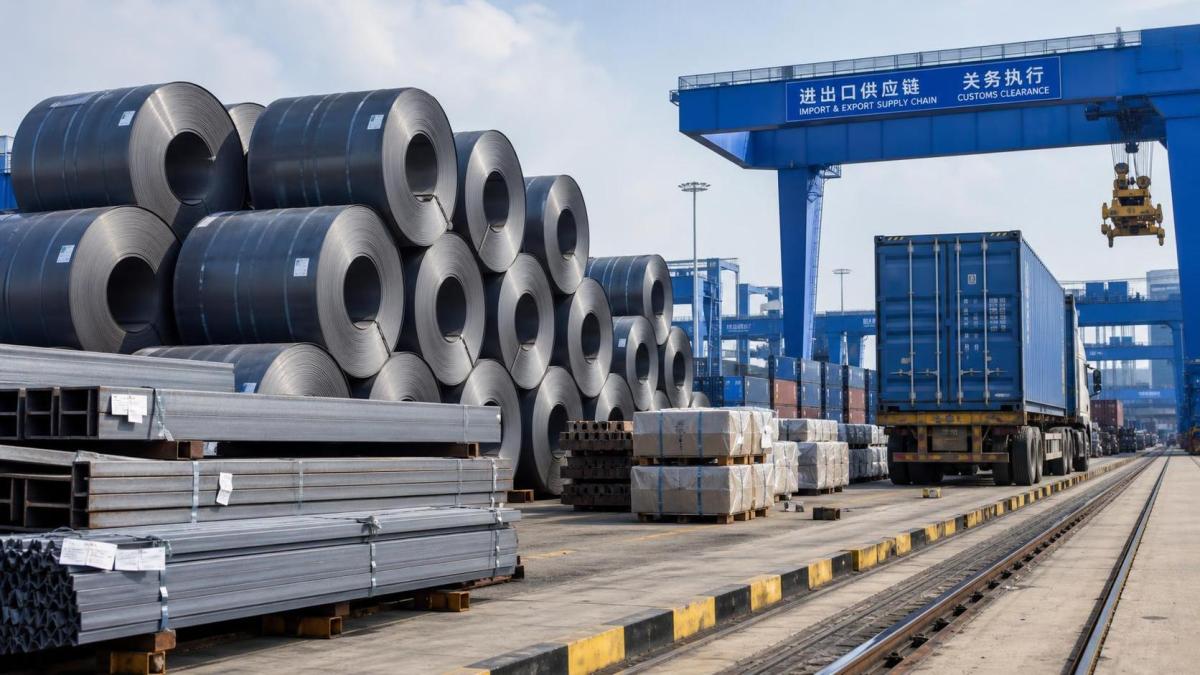
On July 17, 2026, the U.S. Department of Commerce announced an expedited sunset review of the anti-dumping duty order covering hot-rolled strip steel from China, including products under HS 7208, 7211, and 7225. The review matters because it will determine whether the current anti-dumping duties, reaching as high as 127.3%, remain in place. For U.S. importers, manufacturers using these inputs, and supply-chain service providers, the issue is not only tariff exposure but also the knock-on effect on customs clearance costs, purchasing schedules, and compliance declarations.
What Has Officially Been Put in Motion
The confirmed development is limited but commercially significant. The U.S. Department of Commerce has formally initiated the first expedited sunset review of the anti-dumping duty order on hot-rolled strip steel originating in China. The products referenced in the provided information include HS 7208, 7211, and 7225. The review will decide whether the existing anti-dumping duties, with rates of up to 127.3%, will continue.
The supplied information also confirms that this review has direct implications for U.S. import customs costs, procurement lead times, and compliance filing requirements. It further indicates that downstream sectors such as steel structures, pipe manufacturing, and automotive components may need to reassess supply-chain arrangements.
Where the Pressure May Surface Along the Chain
Import-side cost and declaration management
From an industry perspective, U.S. importers are among the most immediately exposed parties because the review centers on whether the current anti-dumping framework remains in force. The likely pressure point is the import process itself: landed cost calculations, customs budgeting, and declaration accuracy all become more sensitive when a high duty rate may continue to apply. What deserves closer attention is whether companies have aligned product classification, origin-related documentation, and internal compliance review with the affected HS categories already identified in the notice summary.
Procurement planning for industrial users
Manufacturers and buyers in steel structures, pipe production, and automotive components may be affected less as a legal respondent and more as an operational user of the material. The practical issue is that purchasing cycles can become harder to lock in when trade-remedy exposure influences cost visibility and delivery planning. Observably, procurement teams should pay close attention to how supplier quotations, lead-time assumptions, and contract terms reflect the possibility of continued duty exposure rather than treating current sourcing conditions as stable.
Supply-chain coordination and delivery execution
Supply-chain service providers, including parties involved in shipment coordination, customs handling, and delivery scheduling, may also see tighter execution requirements. If compliance filing expectations and clearance costs remain sensitive, document consistency and timing discipline become more important across booking, customs submission, and delivery handover. Analysis shows that even without a final new outcome yet, the review itself is a signal for companies to examine whether their transaction documents and delivery commitments can withstand a more closely watched trade-compliance environment.
Practical Points Companies Should Track Now
Check whether affected product scope touches current business
Companies should first confirm whether their traded or purchased products fall within the cited HS headings and whether those items are connected to current U.S.-bound business. This is not a conclusion about expanded scope; it is a basic screening step tied directly to the reviewed order described in the provided information.
Review customs and compliance files before shipment milestones
Because the supplied summary specifically points to customs clearance cost and compliance declaration implications, firms should revisit commercial invoices, product descriptions, classification support, origin-related records, and internal approval trails tied to affected shipments. Where bid files or customer technical documents reference these materials, it is also prudent to verify whether trade-compliance assumptions remain current.
Revisit procurement timing and supplier arrangements
Analysis shows that the main near-term business issue is not a confirmed new tariff outcome, but uncertainty around continued duty treatment. Buyers and sourcing teams should therefore review order timing, quotation validity, and alternative supply arrangements with care. This is especially relevant where delivery schedules are tight or where downstream production depends on predictable steel input costs.
Watch for later wording and execution signals
It is more appropriate to understand this stage as an active review process rather than a completed rule change. Companies should closely monitor subsequent official wording, market-facing contract language, and any changes in compliance practice that may affect declarations, purchasing decisions, or shipment release planning. The current information does not provide those later details, so they should not be assumed.
Why This Looks More Like an Execution Signal Than a Final Outcome
Analysis shows that this development should not yet be read as a newly finalized duty decision. It is better understood as a formal procedural step with direct commercial relevance because it puts continuity of the existing anti-dumping order under review. That matters for industry participants because trade cases of this kind affect operations before any final commercial adjustment is fully absorbed by the market.
From an industry perspective, the more important question for now is not only whether duties remain, but how companies adjust around compliance review, purchasing discipline, and supplier risk assessment while the review proceeds. This is why the event deserves attention as an execution signal and a trigger for internal checks, rather than as a closed outcome.
How This Update Is Best Read at Present
The immediate significance of this case lies in its effect on business planning rather than in any confirmed new end result. The review opens a period in which importers, buyers, and downstream manufacturers may need to reassess cost assumptions, document readiness, and sourcing resilience tied to Chinese hot-rolled strip steel. A neutral reading is that the event reflects an active and material trade-rule process with operational consequences already worth tracking.
At this stage, it is more appropriate to understand the development as a live regulatory and trade-compliance dynamic that requires continued observation, especially for customs handling, procurement scheduling, and downstream supply-chain decision-making.
Basis of This Article and What Still Needs Verification
This article is generated solely from the user-provided news title, event date, and event summary. The analysis is based on the stated facts that the U.S. Department of Commerce initiated an expedited sunset review on July 17, 2026, covering hot-rolled strip steel from China under the cited HS headings, and that the review will determine whether existing anti-dumping duties of up to 127.3% will remain in place.
For events of this kind, commonly relevant source types may include official government notices, releases from regulatory or trade authorities, customs or trade administration information, industry association updates, standard-setting documents, and reporting by established professional media. No specific official source link was provided in the input, so the exact official publication path still requires verification.
Further observation is still needed regarding later policy wording, compliance implementation approaches, procurement document changes, tender-file adjustments, market feedback, and how affected companies ultimately execute their sourcing and delivery decisions.
By clicking 'Allow All', you agree to the storage of cookies on your device to enhance site navigation, analyze site usage and assist with our marketing efforts.