


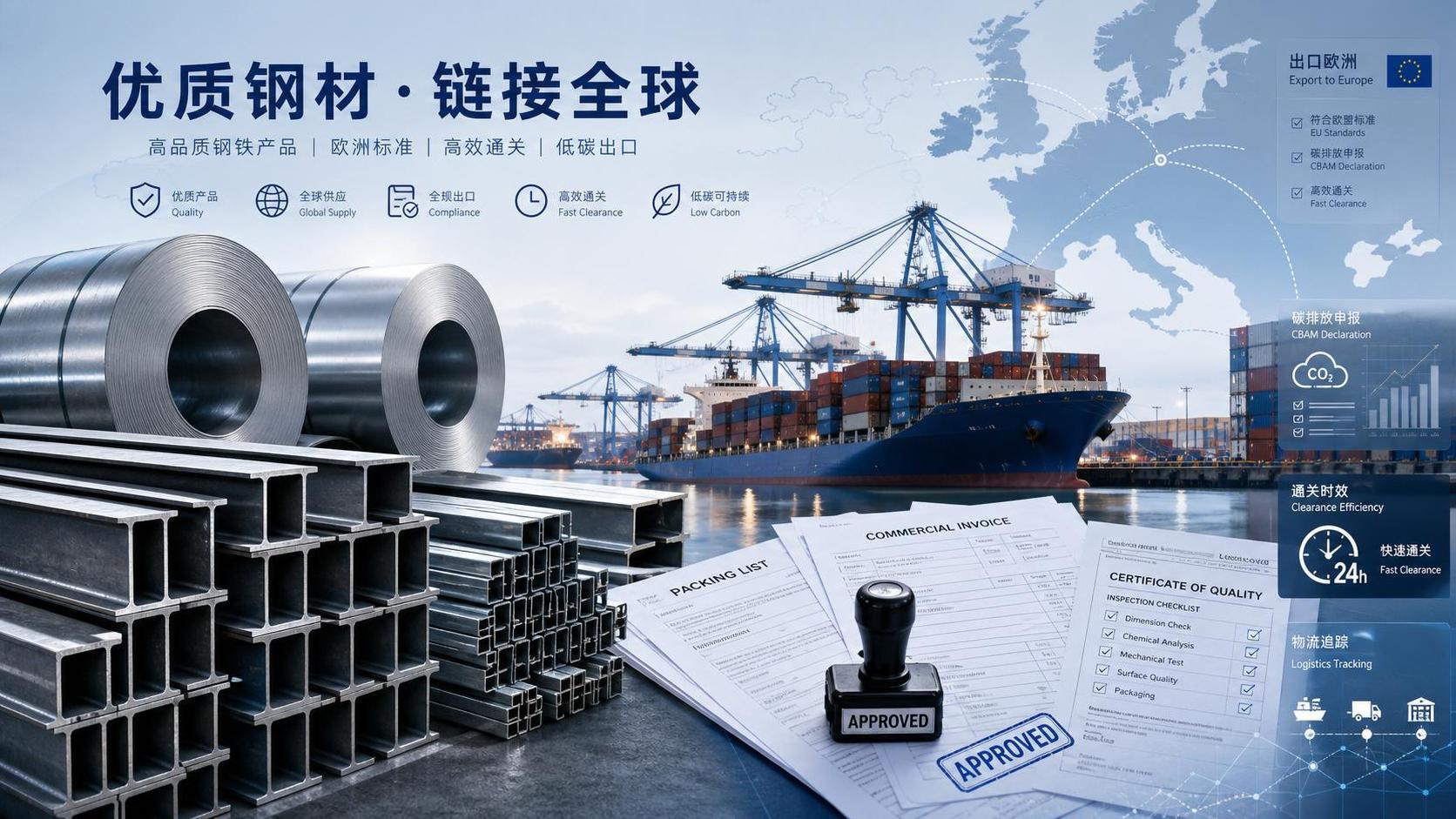
On July 18, 2026, the European Commission released the third-phase implementing rules for the CBAM transition period, setting a new reporting threshold for certain steel and section products exported to the EU. From an industry perspective, this matters directly to steel exporters, manufacturers, traders, customs-facing teams, and supply chain service providers because the new monthly embedded emissions filing and third-party verification requirements are tied not only to compliance costs, but also to customs clearance timing and delivery reliability.
What the New Requirement Covers
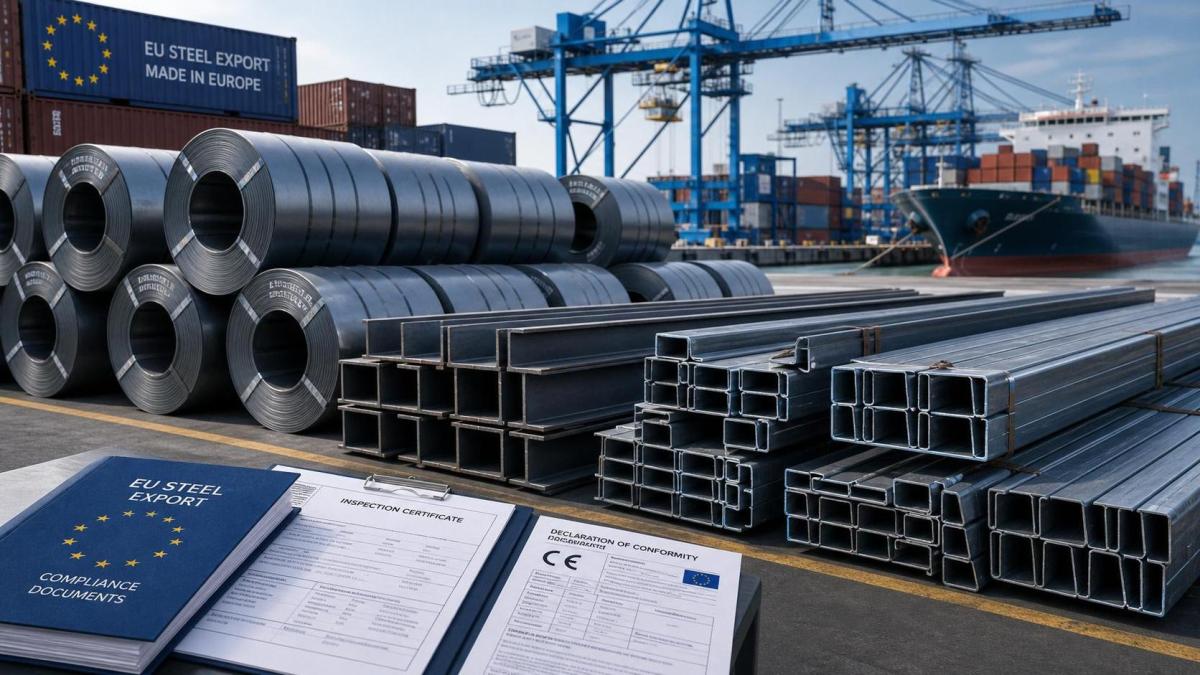
According to the information provided, the European Commission formally issued the third-phase CBAM transition rules on July 18, 2026. Starting October 1, 2026, all hot-rolled coil, H-beams, cold-formed sections, and other steel and section products exported to the EU must submit monthly embedded carbon emissions data through the CBAM system, together with third-party verification reports.
The update directly affects customs clearance procedures, compliance costs, and delivery schedules for Chinese exporters. The same information states that non-compliance may result in cargo being held at port or refused entry.
Where the Pressure Will Likely Appear First
Export transactions move from product shipment to document readiness
Analysis shows that direct trading companies are likely to feel the immediate effect in export execution. The issue is not only whether goods are sold, but whether the required emissions data and verification materials are ready in time for CBAM system submission. What deserves closer attention is the link between document preparation and shipment release, since delays at this stage can affect customs handling and delivery commitments.
Manufacturing and processing operations face new reporting coordination needs
For steel mills and processors producing hot-rolled coil, H-beams, and cold-formed sections, the update raises the importance of internal data coordination. Observably, the operational pressure may center on how product-level embedded emissions information is collected, organized, and handed over for external verification. The practical impact is likely to appear in handoffs between production, compliance, and export-facing teams.
Logistics and customs-facing service providers will need tighter timing control
Supply chain service providers, including those involved in customs processes and shipment coordination, may also be affected because the rule change is tied to clearance outcomes. From an industry perspective, the main concern is whether cargo documentation, emissions reporting, and verification status remain aligned before goods reach the EU entry point. Any mismatch could extend lead times or disrupt planned delivery windows.
EU-facing buyers and distributors may pay closer attention to execution risk
For downstream buyers, distributors, and procurement teams connected to EU-bound steel trade, the update may shift attention toward supplier preparedness. Analysis shows that the immediate concern is less about broad market interpretation and more about whether suppliers can maintain stable delivery under the revised CBAM filing process.
What Companies Should Watch Now
The October 1 compliance date and monthly reporting rhythm
The most immediate issue is the start date. Companies involved in affected steel exports need to focus on the fact that reporting is described as monthly, which means compliance is not limited to a one-time filing. The business implication is that reporting capacity and process discipline will matter on an ongoing basis.
Product scope and shipment-level applicability
What deserves closer attention is the product range explicitly mentioned in the provided information, including hot-rolled coil, H-beams, and cold-formed sections. Companies shipping these categories to the EU should closely review where these products sit within their export pipeline, customer commitments, and documentation flow.
Third-party verification as a practical bottleneck
The requirement for third-party verification reports deserves separate attention because it adds a distinct procedural layer beyond internal reporting. Observably, companies will need to watch whether verification timing, document completeness, and submission readiness are consistent with shipment plans and customs clearance expectations.
Customer communication and delivery planning
Analysis shows that affected exporters may need to pay closer attention to contract execution and delivery communication with EU customers. Since the provided information indicates a risk of cargo being held or refused entry if requirements are not met, the distinction between policy language and day-to-day shipment execution becomes especially important.
Why This Reads as More Than a Routine Filing Update
Observably, this development is more meaningful as an operational compliance signal than as a standalone policy headline. The reason is straightforward: the requirement is tied to monthly emissions reporting, third-party verification, and customs outcomes for specific steel exports. That combination suggests the issue should be read not only as a reporting adjustment, but as a process change with direct consequences for trade execution.
It is more appropriate to understand this as a near-term operational change with longer-term signaling value. The confirmed information already points to immediate effects on clearance, cost, and delivery. At the same time, the broader commercial implications still require continued observation because the input does not provide further detail on implementation practice beyond the announced requirements and compliance risks.
How the Industry May Need to Read This Update
In practical terms, the July 18 announcement matters because it moves CBAM transition compliance for affected steel products closer to routine monthly execution. For companies exporting these goods to the EU, the key issue is no longer abstract regulatory awareness, but whether emissions data, verification, and shipment processes can stay aligned under the new timetable.
From an industry perspective, this is best understood as an immediate compliance development with clear operational consequences, while the full extent of its commercial impact still needs to be watched through actual implementation.
Basis of This Article
This article is based on the user-provided news title, event date, and event summary regarding the European Commission's July 18, 2026 update to CBAM transition-period reporting requirements for steel imports. No additional unverified facts, data points, or case details have been added.
For this type of industry update, relevant source categories typically include official announcements, company disclosures, industry association information, authoritative media reporting, and standard-setting or regulatory documents. A specific official source link was not provided in the input, so the underlying source text and any subsequent rule clarifications still require ongoing verification. Areas that merit continued attention include later official wording, implementation practice in customs-facing processes, and any further clarification affecting affected steel product reporting and verification workflows.
By clicking 'Allow All', you agree to the storage of cookies on your device to enhance site navigation, analyze site usage and assist with our marketing efforts.