


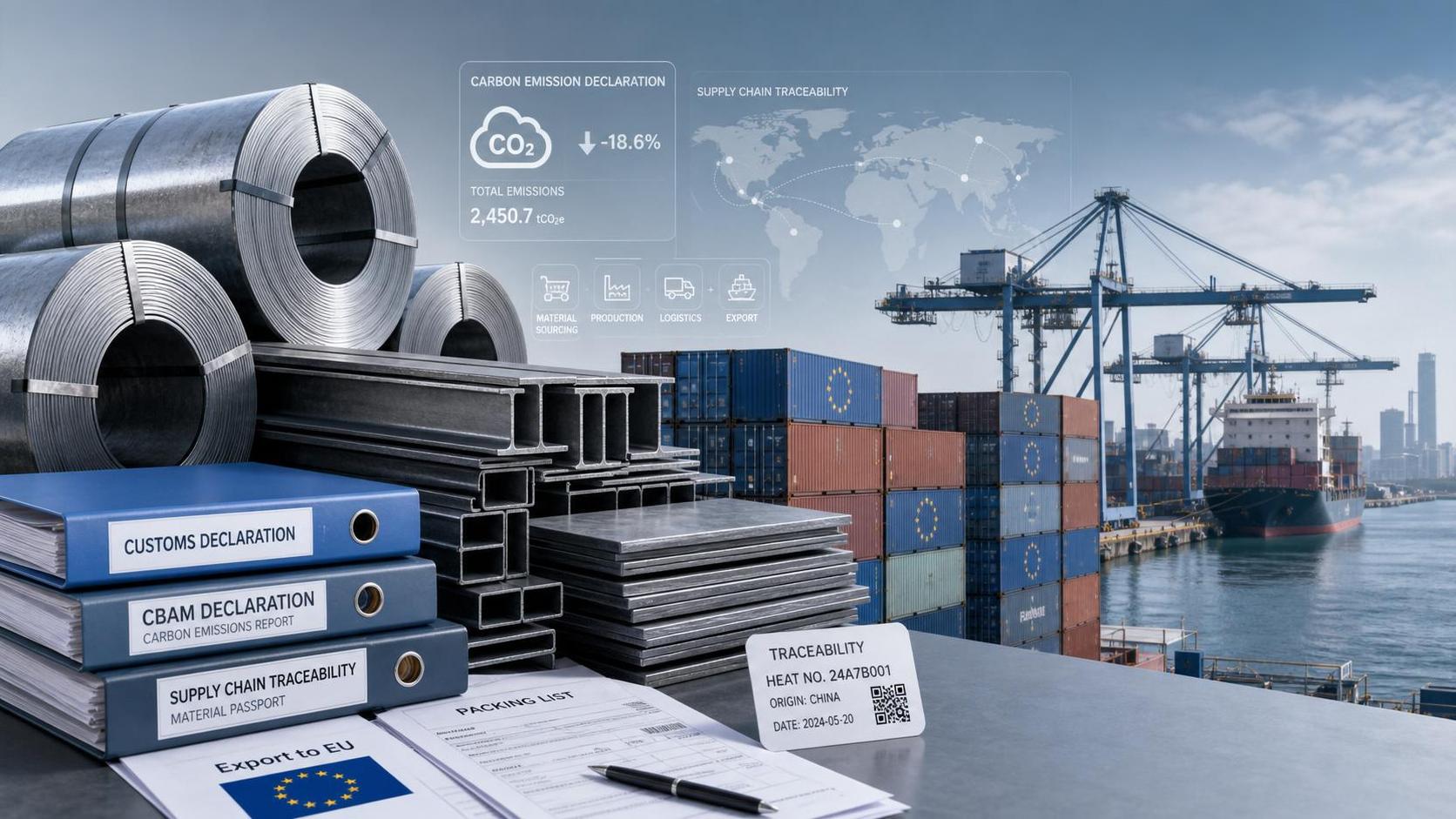
On July 2, 2026, the European Commission released an amended CBAM implementing regulation that sharpens transitional compliance requirements for steel and structural steel imports into the EU. Effective from July 1, 2026, importers handling products supplied by third-country exporters, including Chinese manufacturers, must submit quarterly data through the CBAM portal on embedded carbon emissions and the calculation method used. For steel trade, upstream sourcing, customs processing, and supplier documentation, this is worth close attention because the new requirement now extends to proof of carbon intensity for inputs such as iron ore, scrap, and electricity sources, with direct implications for clearance timing and compliance cost.
What the amended rule now requires
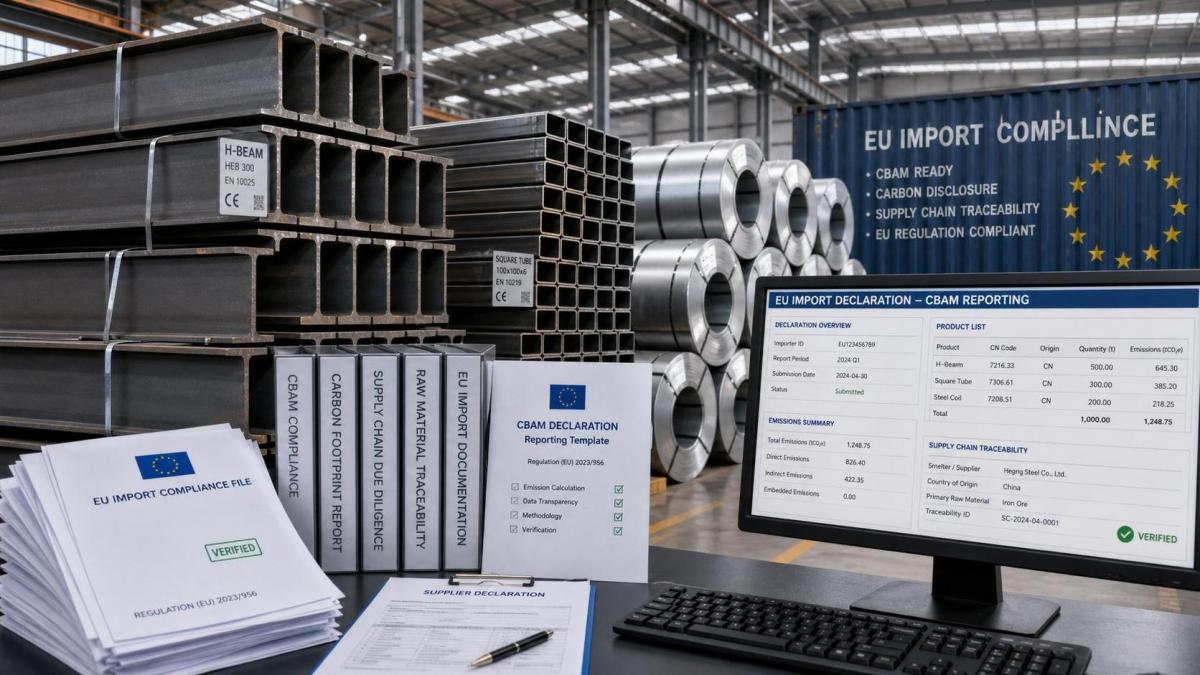
The confirmed change is that the European Commission published an amendment to the CBAM Implementing Regulation on July 2, 2026, and clarified that from July 1, 2026, importers of steel products and profiles supplied by third-country exporters must file quarterly declarations through the CBAM portal. Those declarations must cover the products' embedded carbon emissions and the methodology used to calculate them.
The update also newly requires supporting proof on the carbon intensity of upstream materials and inputs, including examples such as iron ore, scrap steel, and electricity sources. According to the information provided, this requirement directly affects customs clearance timing and compliance-related costs.
Where the pressure is likely to appear first
Trade flows into the EU face a more document-heavy process
From an industry perspective, direct importers and trading companies are the first group likely to feel the change. Their exposure is immediate because the quarterly filing obligation sits with the importer through the CBAM portal. The practical pressure point is no longer limited to product-level emissions reporting; it now also includes obtaining and organizing upstream carbon-intensity evidence in a form that can support the declaration.
Upstream sourcing becomes part of compliance readiness
Analysis shows that raw material procurement and supplier management may become more sensitive parts of the steel export chain. Where steelmakers or processors rely on iron ore, scrap, or external power inputs, the ability to trace and document the carbon profile of those inputs may affect how smoothly import declarations can be completed. The issue is not only technical reporting, but also whether upstream records can be produced consistently and on time.
Manufacturers and processors may face new requests from buyers
For steel manufacturers and processors serving EU-bound business, the rule change is likely to shift more compliance work upstream. Importers may ask for clearer emissions calculations, supporting methodologies, and evidence tied to source materials and electricity inputs. What deserves closer attention is that this can affect customer communication, documentation turnaround, and shipment preparation even when the legal filing obligation sits with the importer.
Supply chain service providers may see tighter timelines
Logistics coordinators, customs-related service providers, and other supply chain intermediaries may also be affected indirectly. Observably, where carbon data and supporting proof are incomplete or delayed, the impact may show up in document sequencing, customs processing rhythm, and exception handling around shipments bound for the EU market.
What companies should monitor now
Whether product data and upstream input data can be matched
One practical issue is whether embedded emissions data for the finished steel product can be tied back to upstream input records in a consistent way. The new requirement makes upstream proof part of the reporting picture, so companies involved in EU-bound steel business should focus on whether their existing records can support that link.
How supplier documentation is obtained and updated
Another key point is supplier readiness. Importers and exporters may need closer coordination on the availability, format, and update cycle of carbon-intensity evidence for iron ore, scrap, and electricity sources. Analysis shows that documentation gaps may become a commercial issue as much as a reporting issue, especially where multiple suppliers are involved.
The difference between a legal filing duty and operational responsibility
The formal quarterly declaration obligation applies to the importer, but the operational burden may extend well beyond that entity. What deserves closer attention is the distinction between who files and who must produce usable data. In practice, steel mills, processors, procurement teams, and trade counterparts may all become part of the compliance workflow.
Further wording changes and implementation detail
Companies should also continue watching for how official wording and implementation detail are expressed in practice. The current information confirms the filing requirement and the new upstream proof obligation, but business teams will need to pay attention to how these requirements are interpreted in day-to-day customs and reporting processes.
Why this looks bigger than a routine reporting update
Analysis shows that this development is not just an administrative adjustment to quarterly CBAM reporting. The notable shift is that upstream material and energy evidence is now explicitly part of the compliance picture for steel and profiles. That signals a deeper level of traceability being expected within the supply chain, even during the transitional phase referenced in the title.
It is more appropriate to understand this as both a near-term operational change and a longer-term policy signal. The near-term element is clear: importers must submit quarterly emissions data and methodology through the CBAM portal from July 1, 2026. The longer-term signal lies in the broader expectation that carbon data for steel trade will need to be supported by more granular upstream evidence.
At the same time, this remains a development that warrants continued observation. The information provided confirms the rule update and its immediate compliance consequences, but the full business effect will depend on how consistently data can be collected, exchanged, and accepted across the import process.
How this update is best understood at this stage
For the steel sector, the practical significance of this update is that CBAM compliance is moving closer to the upstream structure of production and sourcing. The direct effect described in the provided information is on customs timing and compliance cost, but the broader implication is that carbon reporting for EU-bound steel trade is becoming more documentation-dependent across multiple business roles.
From an industry perspective, this is not best read as a standalone headline with immediate final outcomes already fixed across the market. It is better understood as a concrete compliance tightening with immediate operational relevance and a wider signal that supply-chain-level emissions evidence is becoming more central to cross-border steel business with the EU.
Basis of this article and points for follow-up
This article is based on the user-provided news title, event date, and event summary. For this type of development, commonly relevant source categories may include official regulatory releases, company disclosures, industry association updates, authoritative media coverage, and standards-related documents.
A specific official source link was not provided in the input, so the underlying text and any subsequent implementation detail should continue to be verified. Follow-up attention should focus on future official clarifications, operational interpretation in reporting and customs processes, and any further detail affecting documentation for upstream materials and electricity sources.
By clicking 'Allow All', you agree to the storage of cookies on your device to enhance site navigation, analyze site usage and assist with our marketing efforts.