



On July 3, 2026, the U.S. Department of Commerce announced a new expedited sunset review covering anti-dumping duties on hot-rolled steel coil from China under HS 7208 and 7225. The notice also introduces added customs documentation requirements for importers starting July 15, 2026, including certified origin declarations, full supply-chain cost breakdowns, and processing descriptions. For steel traders, distributors, procurement teams, and supply-chain service providers, the development is notable because it combines a trade remedy review with immediate compliance demands that may affect clearance timing and transaction preparation.
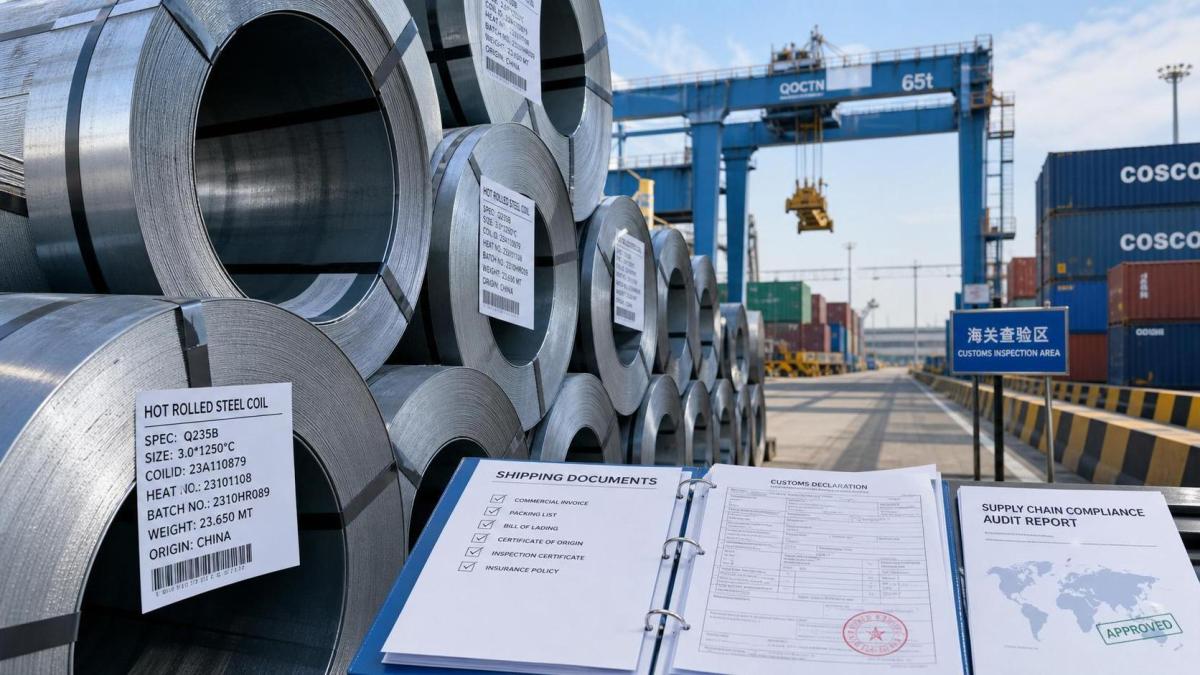
What the July 3 notice confirms
According to the provided information, the U.S. Department of Commerce issued the announcement on July 3, 2026, following an application by the American Iron and Steel Institute (AISI). The action concerns an expedited sunset review of the anti-dumping duty order on hot-rolled steel coil originating in China.
The products referenced in the notice fall under HS 7208 and HS 7225. In parallel with the review, importers will be required from July 15, 2026 to submit additional materials at customs clearance, namely a certified declaration of origin, a complete cost composition across the supply chain, and a description of processing steps.
The provided summary further states that the measure will directly affect procurement compliance costs and delivery timelines for distributors in Europe and the United States.
Where the operational pressure is likely to appear
Import trading workflows may face tighter document checks
From an industry perspective, direct trading companies are likely to feel the immediate effect because the new requirement applies at the customs stage. The main pressure point is not only whether cargo is booked, but whether origin, cost, and processing records can be assembled in a form that meets the stated requirement. What deserves closer attention is the risk of longer internal review cycles before shipment release or clearance filing.
Distributors may need to reassess lead-time assumptions
For channel and distribution businesses serving the U.S. or European markets, the reported impact on compliance cost and delivery timing is especially relevant. Analysis shows that even where commercial demand remains unchanged, order planning may need to account for additional time spent verifying supporting materials. The key issue here is operational predictability rather than any confirmed change in end-market demand.
Suppliers and processors may come under closer information requests
Upstream suppliers, processors, and related service providers may also be affected because the requested documentation includes supply-chain cost composition and processing descriptions. Observably, this can shift more information requests back through the chain, especially where multiple entities contribute to sourcing, processing, or export preparation. The practical concern is whether supporting records are complete, consistent, and ready for importer use.
Logistics and compliance service providers may see added coordination work
Customs brokers, compliance teams, and supply-chain service firms may need to handle more document coordination between importer, supplier, and processor. It is more appropriate to understand this as an increase in execution complexity at the transaction level, particularly for shipments involving detailed origin tracing and cost disclosure preparation.
What companies should watch now
Track any follow-up wording from the authorities
Analysis shows that the announced review and documentation rules are the confirmed points at this stage, but companies should distinguish between the current notice and any later procedural clarification. The immediate task is to monitor whether official wording around submission standards, scope interpretation, or document form becomes more specific.
Check whether targeted product lines map clearly to HS 7208 and 7225
Businesses handling hot-rolled steel coil should review whether the goods they import, distribute, or process are tied to the HS codes identified in the notice. The important practical issue is product mapping inside purchasing, customs, and sales records, because document preparation depends on a clear match between transaction data and the covered product category.
Prepare origin, cost, and processing records before clearance deadlines
What deserves closer attention is readiness before July 15, 2026 rather than after a shipment reaches customs. Importers and their suppliers may need to confirm whether origin declarations can be certified, whether cost information is complete across the relevant supply chain, and whether processing descriptions are consistent with other trade documents.
Align supplier communication with delivery commitments
Observably, the new requirement has implications for customer communication and fulfillment timing. Companies may need to speak earlier with suppliers and customers about document lead times, possible review delays, and the difference between a commercial shipment schedule and a customs-ready shipment schedule.
Why this should be read as a compliance signal, not a final outcome
Analysis shows that this development carries two layers of meaning. First, it is a confirmed procedural event: an expedited sunset review has been initiated, and importers face added documentation requirements from mid-July 2026. Second, it is also a policy and compliance signal that documentation quality around origin, cost, and processing has become a near-term operational issue for affected transactions.
It is more appropriate to understand this as an active development that requires continued observation, rather than as a completed market result. The review itself and the added filing burden are already meaningful for business operations, but broader trade or market consequences should not be treated as settled based on the currently provided information alone.
How the industry can read the current stage
At this point, the announcement is most usefully understood as a short-term compliance change combined with a longer-running trade-policy signal. The immediate effect lies in documentation, customs preparation, and potential delivery friction. The wider significance will depend on how the review proceeds and whether further official clarification changes the practical burden on importers and supply-chain participants.
A neutral reading is that the development matters now for execution, while its broader commercial meaning still requires monitoring.
Basis of this article and points still to verify
This article is based on the user-provided news title, event date, and event summary. For developments of this kind, commonly relevant source categories may include official government notices, company disclosures, industry association information, authoritative media coverage, and standard-setting or customs-related documents.
No specific official source link was provided in the input, so the exact official link remains to be verified on an ongoing basis. Continued attention should focus on any follow-up official clarification regarding review procedure, document requirements, and how the stated rules are applied in actual customs processing.
By clicking 'Allow All', you agree to the storage of cookies on your device to enhance site navigation, analyze site usage and assist with our marketing efforts.