



On July 1, 2026, the transitional implementation rules for the steel sector under the EU Carbon Border Adjustment Mechanism (CBAM) formally took effect. For Chinese suppliers exporting products such as hot-rolled coil, H-beams, angle steel, and other structural sections to the EU, the immediate issue is no longer only product delivery, but whether each shipment can be supported by embedded carbon emissions data and a verification report in the EU-MRVS system. This matters across export trade, distribution, project supply, and customer delivery, because any gap in filing may now translate directly into customs delays or rejected cargo.
What the rule now requires for steel exports
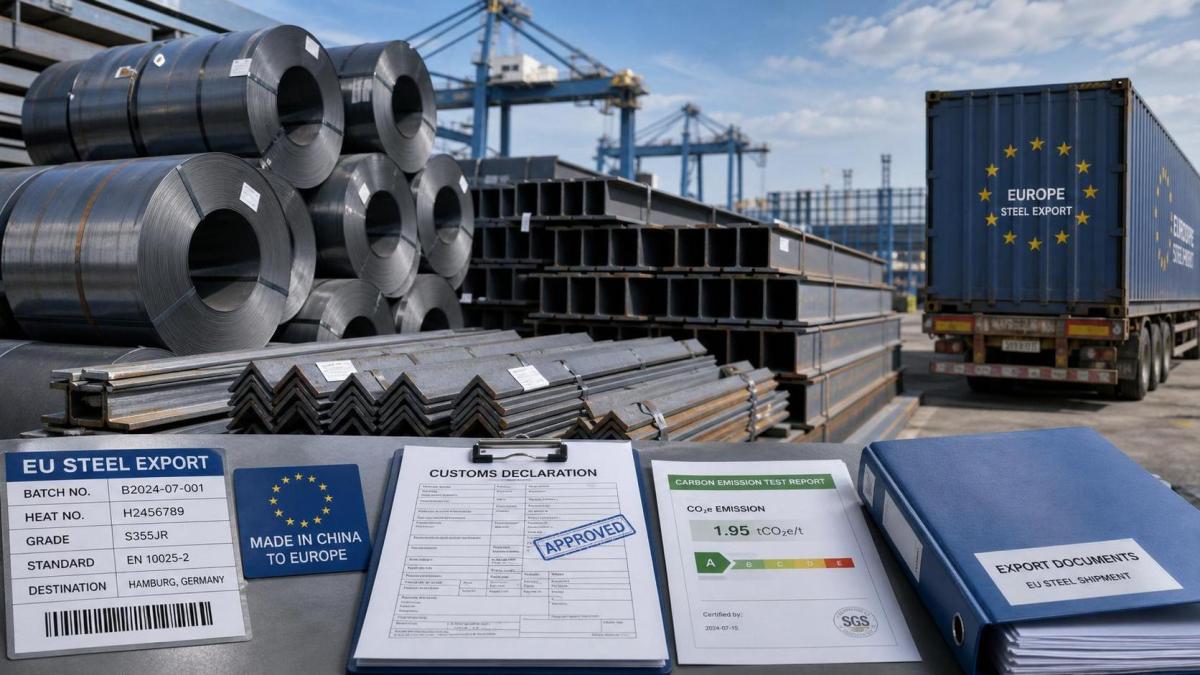
According to the provided information, the transitional implementation rules for the EU CBAM steel sector became effective on July 1, 2026. From that date, all Chinese suppliers exporting hot-rolled coil, H-beams, angle steel, and related sections to the EU are required to declare the embedded carbon emissions of each batch in the EU-MRVS system and submit a verification report.
The same information states that failure to complete compliant reporting may lead to customs clearance delays or refusal of receipt. The direct consequence identified in the input is disruption to overseas distributors' delivery schedules and the progress of end-use projects.
Where the pressure is likely to appear first
Export-facing steel suppliers move from product compliance to shipment-level carbon reporting
From an industry perspective, suppliers shipping steel products to the EU are likely to be affected first because the requirement applies at the batch level. The operational impact is likely to show up in shipment preparation, document readiness, and coordination around verification materials. What deserves closer attention is whether export documentation can move in step with the physical shipment schedule.
Distributors and channel partners face delivery timing risk
Analysis shows that overseas distributors may feel the effect through timing rather than only regulation. If a shipment is delayed at customs or refused because reporting is incomplete, inventory flow and onward delivery commitments may be disrupted. For channel businesses, the practical concern is not only whether goods are sold, but whether they can be received and handed over on time.
End-use projects may be exposed through supply interruption
Observably, terminal projects using imported steel sections may also be affected, even if they are not the reporting party themselves. The provided information specifically notes potential impact on end-project schedules. That means project-linked procurement, installation sequencing, and delivery milestones may all become more sensitive to document accuracy and filing timing.
Supply chain service providers may need tighter document coordination
It is more appropriate to understand this as an execution issue for logistics and trade support roles as well. Where shipments depend on complete supporting materials, service providers involved in order processing, customs coordination, and delivery scheduling may need closer alignment with exporters and buyers on carbon data submission status and verification documentation.
What companies should watch in day-to-day execution
Whether every batch is matched with usable emissions data
Analysis shows that the key practical issue is batch-by-batch readiness. The rule, as provided, is linked to each shipment rather than a general annual statement. Companies should therefore focus on whether product batches destined for the EU can be matched with the required embedded carbon emissions information before dispatch.
Whether verification materials can keep pace with shipment schedules
What deserves closer attention is the timing of the verification report in relation to export delivery. Even where a supplier understands the rule, the business risk may still sit in execution: whether supporting documents are complete when the cargo needs to move, and whether handoff between internal teams and external partners is clear enough to avoid delay.
Which products and customer orders carry the highest immediate exposure
From an industry perspective, firms with active EU orders for hot-rolled coil, H-beams, angle steel, and similar sections should review those flows first. The near-term priority is likely to be shipments already tied to distributor commitments or project deadlines, because the provided information indicates that non-compliance can directly affect downstream delivery and project progress.
How to communicate with buyers and partners around filing risk
Observably, this is also a customer communication issue. Exporters, distributors, and project-facing teams may need to clarify documentation responsibilities, expected submission timing, and contingency handling where reporting is incomplete. The distinction between policy text and shipment execution is important here: a rule can be clear on paper, while actual order fulfillment still depends on disciplined coordination.
Why this reads as more than a routine filing update
Analysis shows that this development should be read as an operational compliance signal rather than a purely formal policy notice. The immediate confirmed change is procedural: exporters must submit embedded carbon emissions data and a verification report for each batch through EU-MRVS. But the broader meaning for the industry is that carbon-related documentation is becoming part of shipment readiness for affected steel exports.
It is more appropriate to understand this as both a short-term execution challenge and a longer-term signal worth monitoring. Short term, the risk sits in customs clearance, cargo acceptance, and delivery continuity. Longer term, the fact that shipment-level reporting is tied directly to market access suggests that companies active in EU trade cannot treat carbon data preparation as separate from commercial fulfillment.
At the same time, this remains a development that still requires continued observation. The provided information confirms the implementation date, filing requirement, and immediate compliance consequence, but it does not provide broader official interpretation, subsequent adjustments, or additional operating detail.
How the market is likely to frame this now
At this stage, the most grounded reading is that the July 1 implementation marks a live compliance threshold for affected steel exports to the EU. The issue is not only regulatory awareness, but whether exporters and their downstream partners can keep data, verification, customs, and delivery processes aligned on a shipment-by-shipment basis.
From an editorial perspective, this should not be overstated as a full-market conclusion, but it also should not be treated as a minor paperwork update. The current signal is concrete in its immediate business effect: where filing is incomplete, trade flow and project delivery may be disrupted. For the industry, the practical takeaway is to read this as an active operating requirement with broader implications still worth tracking.
Basis of this article and points for further verification
This article is based on the user-provided news title, event date, and event summary. The confirmed facts used here are limited to the stated July 1, 2026 effective date, the requirement for Chinese suppliers exporting specified steel products to the EU to report batch-level embedded carbon emissions and verification reports through EU-MRVS, and the stated risk of customs delay or refusal if reporting is not compliant.
For this type of development, source types typically relevant to ongoing verification include official notices, company disclosures, industry association updates, authoritative media coverage, and standard or rule-related documents. A specific official source link was not provided in the input, so further verification remains necessary. Follow-up attention should focus on any later official clarifications, filing practice details, and execution-related updates affecting shipment handling and customer delivery.
By clicking 'Allow All', you agree to the storage of cookies on your device to enhance site navigation, analyze site usage and assist with our marketing efforts.