


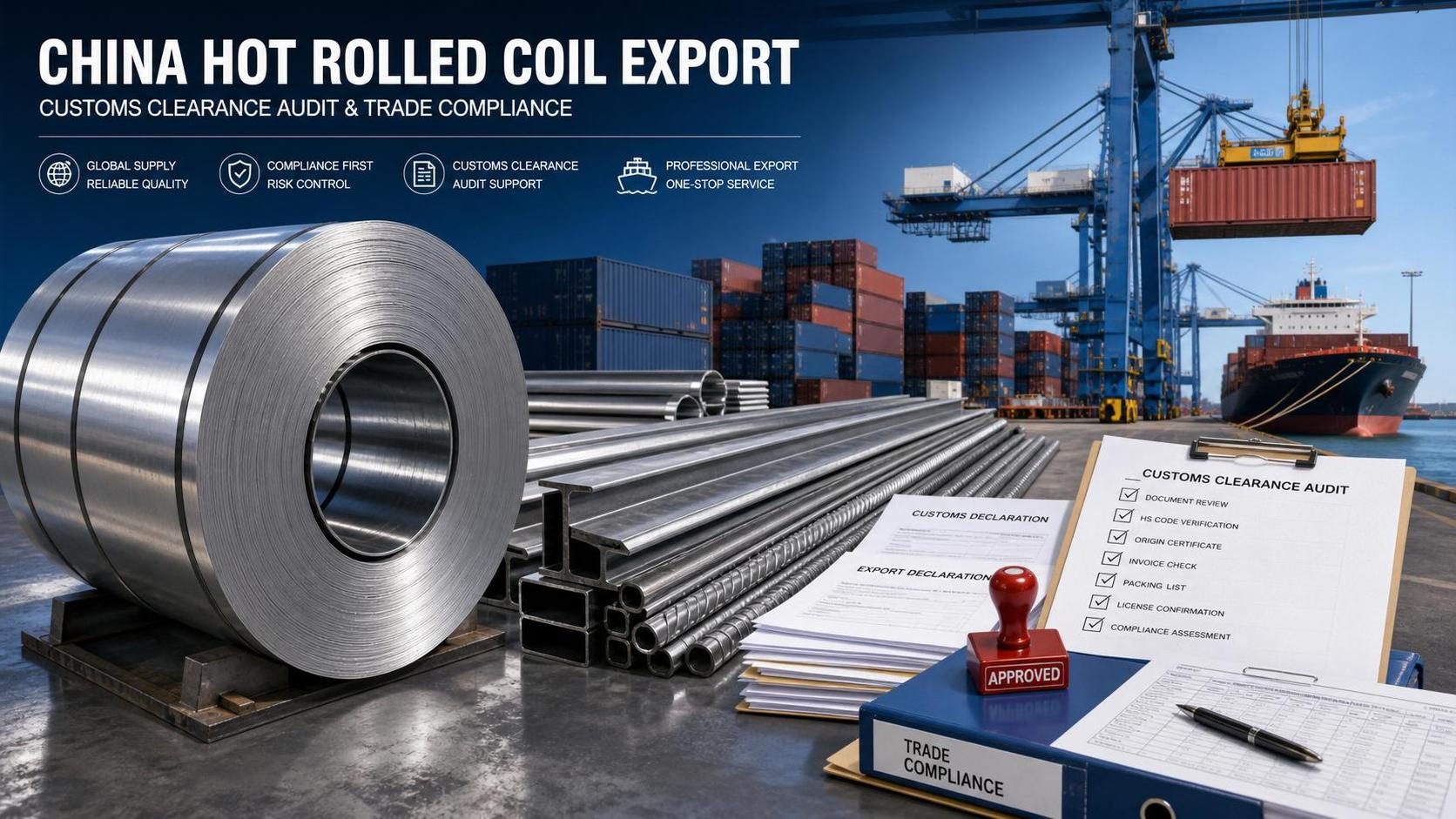
On June 29, 2026, the U.S. Department of Commerce announced a new annual anti-dumping new shipper review covering Chinese hot-rolled steel coil under HS 7208 and 7225. For exporters shipping to the U.S., this is not just a procedural update: it directly touches tariff rate treatment, customs clearance timing, and document compliance from July onward. What deserves closer attention is the pressure this creates for companies that have not yet secured separate rates, especially smaller exporters whose shipments and customer commitments may be more exposed to review-related delays or filing gaps.
A filing deadline with immediate trade implications
According to the information provided, the U.S. Department of Commerce formally initiated an annual anti-dumping new exporter review on June 29, 2026, targeting Chinese hot-rolled steel coil classified under HS 7208 and 7225.
The notice requires involved companies to submit qualification materials and export data by July 15. The review will directly affect the tariff rate applied to exports to the U.S., the efficiency of customs clearance, and the compliance requirements surrounding trade documentation.
The provided information also indicates that the pressure is likely to be more acute for small and mid-sized profile exporters that have not obtained separate rates.
Where the pressure is likely to emerge across the trade chain
Exporters facing tariff and clearance exposure
From an industry perspective, direct exporters are the first group affected because the review is tied to rate eligibility, shipment documentation, and customs processing. For these companies, the main risk is not only whether materials are submitted on time, but whether filing quality supports smooth treatment during U.S. entry procedures.
Supply chain and customs service providers under tighter documentation demands
Customs brokers, freight coordinators, and other supply chain service providers may also feel the impact because review-driven compliance requirements tend to concentrate around data consistency and filing readiness. In practice, this means greater attention to export records, supporting documents, and communication timing between shippers and downstream service partners.
Buyers and delivery planners watching timing risk
Procurement teams and U.S.-bound customers may not be the subject of the review itself, but they can still be affected through shipment scheduling and delivery certainty. Observably, when tariff treatment and clearance timing become less predictable, purchase planning, delivery commitments, and contract execution all come under closer scrutiny.
Smaller suppliers with no separate rate under greater strain
The information provided specifically highlights the supply chain risk for smaller exporters that do not yet have separate rates. Analysis shows that this group may have less room to absorb delays, compliance revisions, or communication errors, making the review a more immediate operational issue rather than a background policy development.
What companies should be watching now
The July 15 submission window
The most immediate practical issue is the qualification and export data deadline. Companies involved need to pay close attention to whether their internal export records, product classification details, and supporting materials are ready for submission within the required timeframe.
The difference between policy notice and shipment execution
What deserves closer attention is the gap between the formal launch of a review and what happens in live business operations. Even when the announcement is clear, the commercial impact often shows up through customs handling, document review, and counterpart communication. Companies should therefore track not only the notice itself, but also how it affects actual shipment processing.
Document consistency across trading and logistics teams
Because the review is described as directly affecting document compliance, firms should examine whether their export, logistics, and customer-facing teams are working from consistent product, shipment, and transaction records. Misalignment in supporting materials can become a practical source of delay when clearance sensitivity rises.
Customer and supplier communication readiness
For businesses already serving the U.S. market, communication discipline matters. Analysis shows that companies may need to prepare for questions on tariff treatment, expected timing, and filing status, especially where delivery cycles are tight or customer schedules are sensitive to customs uncertainty.
Why this should be read as a live trade signal, not a final outcome
Analysis shows that this development is better understood as an active procedural signal than as a settled market result. The confirmed fact at this stage is the initiation of the review and the filing requirement by July 15, along with the stated relevance to tariff rates, customs timing, and document compliance.
It is more appropriate to understand this as a near-term operational development with broader policy significance still requiring observation. The immediate question for the industry is execution: who qualifies, who files correctly, and how that affects shipments moving into the U.S. from July 2026 onward.
A short-term compliance event with wider implications to monitor
At this stage, the industry significance lies less in broad market conclusions and more in the direct effect on export handling. For Chinese hot-rolled coil exporters and the service networks around them, the review creates a practical checkpoint on rate treatment, customs efficiency, and documentation readiness.
A measured reading is appropriate. This is neither a routine notice to ignore nor a fully determined trade outcome. It is more appropriate to understand it as a short-term compliance and clearance issue that may carry wider implications depending on how the review proceeds and how affected companies respond.
Basis of this article and points requiring continued verification
This article is based on the user-provided news title, event date, and event summary. The core information used here includes the June 29, 2026 announcement, the scope covering Chinese hot-rolled steel coil under HS 7208 and 7225, the July 15 qualification and export data submission requirement, and the stated impact on tariff rates, customs clearance timing, document compliance, and supply chain risk for exporters without separate rates.
For this type of industry update, commonly relevant source categories may include official government notices, company disclosures, industry association updates, authoritative media reporting, and trade-related regulatory documents. A specific official source link was not provided in the input, so continued verification is still necessary. Follow-up attention should remain on any subsequent official wording, filing-related clarification, and operational effects on export clearance from July 2026 onward.
By clicking 'Allow All', you agree to the storage of cookies on your device to enhance site navigation, analyze site usage and assist with our marketing efforts.