


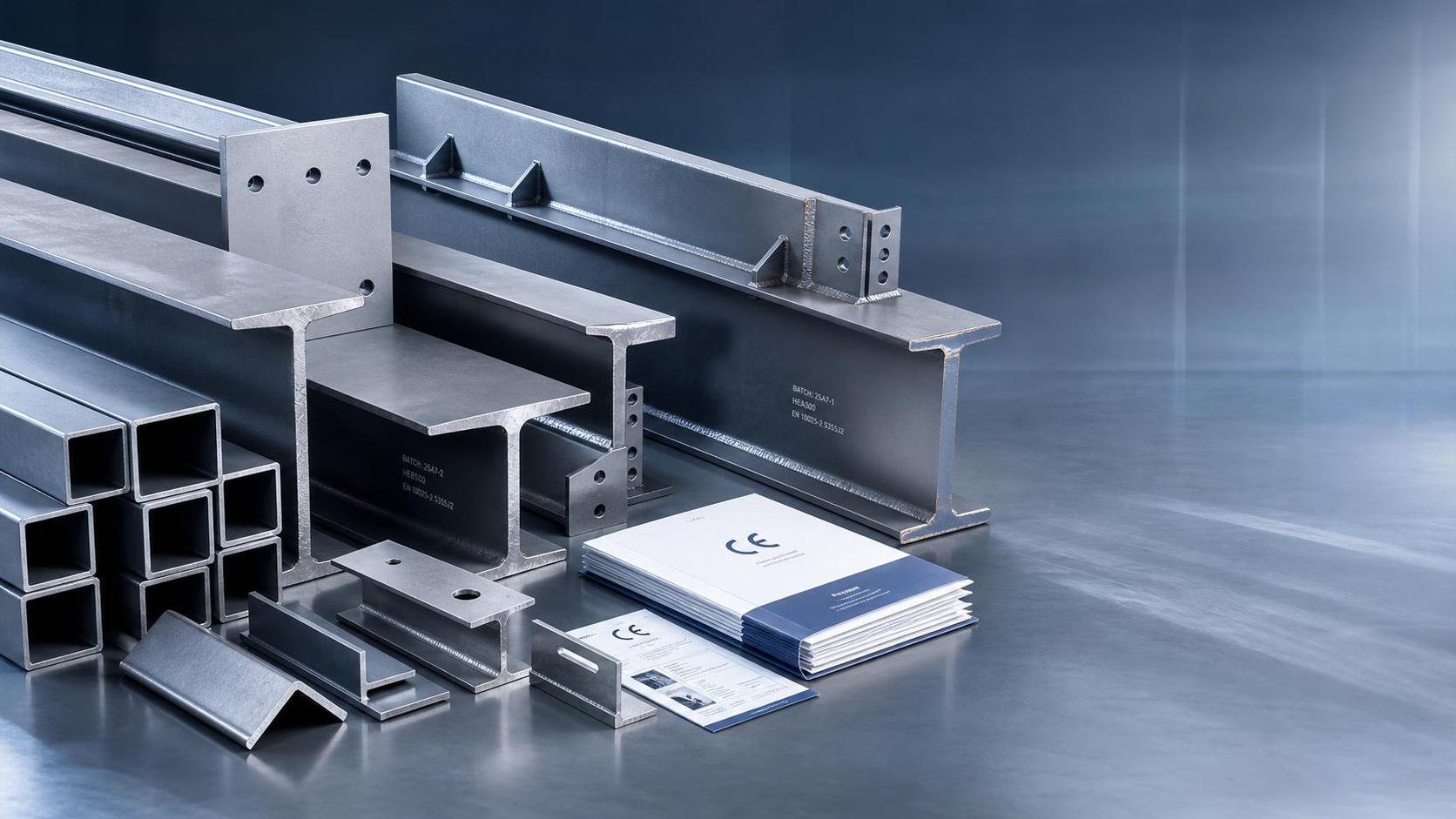
On July 8, 2026, the Official Journal of the European Union published EN 1090-1:2026, replacing the 2018 edition and setting a mandatory application date of January 1, 2027. For companies supplying structural steelwork, bridge components, and industrial sections into the EU market, this is not just a standards update but a compliance change that affects certification timing, technical documentation, traceability controls, and delivery readiness. The development deserves attention because exporters that do not complete certification under the revised standard will no longer be able to place relevant products on the EU market from 2027.
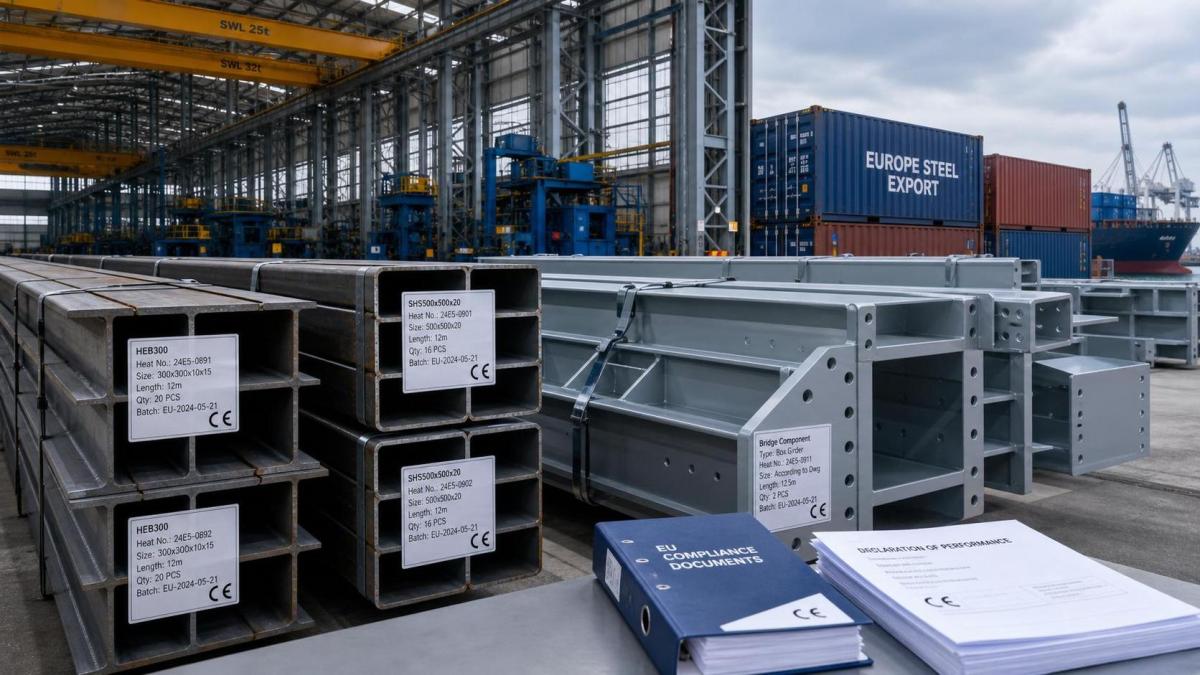
What the published revision confirms
The confirmed facts are limited but commercially significant. EN 1090-1:2026 was published in the OJEU on July 8, 2026 and will replace the current 2018 version. The revised standard becomes mandatory on January 1, 2027. According to the provided event summary, the new version materially tightens requirements in three areas: welding procedure qualification, material traceability, and technical documentation supporting the CE marking process. The change directly affects the compliance route for Chinese exporters supplying construction steel structures, bridge components, and industrial steel sections to the EU. Companies that have not completed certification to the new standard will not be able to lawfully place those products on the EU market from 2027 onward.
Where pressure is likely to appear across the supply chain
Exporters face a narrower compliance window
From an industry perspective, exporters are the first group exposed because market access depends on certification under the revised standard before the mandatory date. The impact is likely to show up in pre-shipment compliance review, customer qualification, contract execution, and product release decisions. What deserves closer attention is whether existing export documentation and certification planning are still aligned with the new standard rather than the replaced 2018 version.
Fabricators and processors may need stronger production records
Analysis shows that processing and manufacturing companies are likely to feel the change through workshop controls and document retention. Since the revised standard tightens welding procedure qualification and material traceability, affected businesses should pay closer attention to how production records, batch linkage, and technical files are prepared for certification and CE-related documentation. The operational issue is not only making the product, but proving conformity in a way that matches the revised standard.
Procurement and project buyers may need to reassess supplier readiness
Buyers, import-side procurement teams, and project contractors may also be affected because supplier approval and delivery planning depend on valid compliance status. Observably, the change could influence vendor qualification, bid document review, and acceptance of technical files for structural steel products intended for the EU market. The practical point for these parties is to check whether suppliers are transitioning to EN 1090-1:2026 in time for future deliveries.
Certification and testing service providers may see a shift in review focus
For certification-related service providers and testing bodies, the likely effect is a higher concentration on updated review scope, especially around welding qualification evidence, traceability records, and CE technical documentation. Analysis shows that this matters because any mismatch between enterprise records and revised certification expectations could slow approvals or complicate market access preparation, even if commercial demand remains unchanged.
What companies should review now
Check whether current certification plans still match the new timeline
Analysis shows that the immediate priority is to compare ongoing or planned certification work against the January 1, 2027 mandatory date. Companies relying on certification linked to the 2018 version should verify whether their current roadmap, internal review schedule, and customer commitments still hold under EN 1090-1:2026.
Re-examine welding and traceability documentation
What deserves closer attention is the documentary side of compliance. Because the provided summary points specifically to stricter welding procedure qualification and material traceability requirements, affected companies should review whether existing records, supporting files, and product traceability chains are sufficient for recertification under the revised standard. This should be understood as a practical compliance checkpoint rather than proof that any particular file set is already acceptable.
Review CE technical files used in bids and deliveries
Observably, CE marking documentation may become a more sensitive point in tenders, customer audits, and shipment release. Exporters and suppliers should therefore revisit the technical documents that accompany quotations, contracts, and final deliveries for relevant steel products. The key issue is consistency between product documentation and the revised standard's stricter requirements.
Watch for changes in customer specifications and delivery conditions
The provided information does not set out detailed enforcement practice, so companies should not assume that implementation will be uniform across all transactions from the outset. It is more appropriate to monitor how customers, certification channels, and project documents begin referring to EN 1090-1:2026 in purchasing requirements, qualification clauses, and delivery conditions over the transition period.
Why this should be read as an execution signal
Analysis shows that this development is better understood as an executed rule change with a defined compliance deadline, not as an early-stage policy discussion. The publication in the OJEU and the stated mandatory date indicate that the market now has a transition window rather than an open-ended consultation phase. At the same time, the available input does not provide detailed implementation guidance, so industry participants still need to watch how certification practice, buyer-side acceptance standards, and tender language develop in response.
How to interpret the current stage
The most balanced reading is that EN 1090-1:2026 creates a near-term compliance adjustment for steel exporters and related supply-chain participants serving the EU market. The confirmed change is already concrete enough to affect certification planning and document control, but some practical application details still require observation. For that reason, this is best understood as a landed regulatory signal with immediate preparation value, rather than a complete picture of final market practice.
Basis of this article and what still needs verification
This article is generated from the user-provided news title, event date, and event summary. For developments of this kind, relevant source categories typically include official notices, regulator publications, trade authority updates, industry association communications, standard-setting documents, and reporting by established professional media. A specific official source link was not provided in the input and should therefore be verified on an ongoing basis. Continued attention is also needed on later implementation language, certification interpretation, tender document changes, industry feedback, and how affected companies complete the transition in practice.
By clicking 'Allow All', you agree to the storage of cookies on your device to enhance site navigation, analyze site usage and assist with our marketing efforts.