


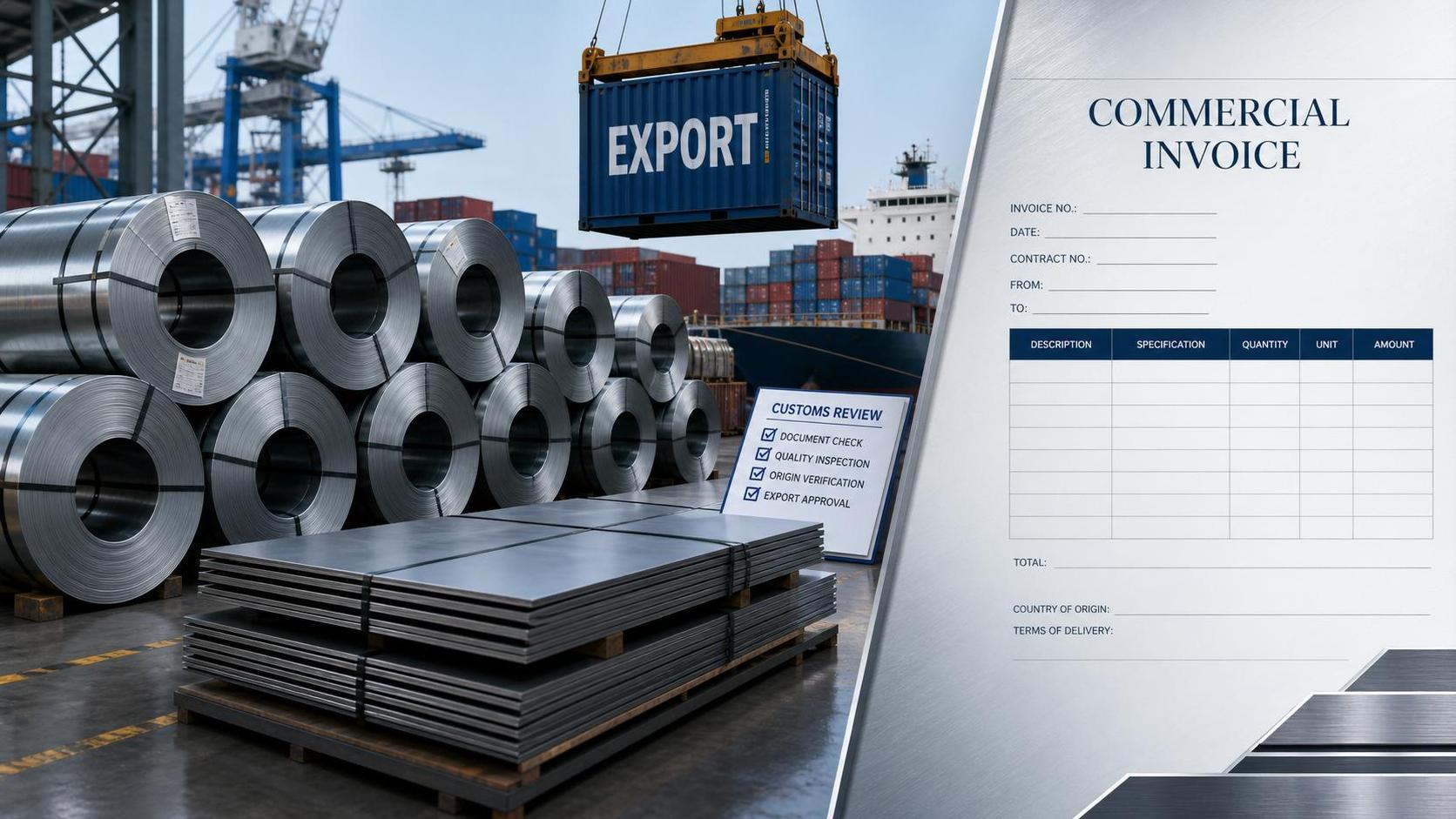
On July 9, 2026, the U.S. Department of Commerce announced the start of an annual administrative review of the antidumping duty order covering hot-rolled steel flat products from China. The review applies to export shipments from April 1, 2025 to March 31, 2026 and matters because it can affect customs cost, cash deposit exposure, and near-term purchasing decisions for importers, distributors, and downstream steel users in sectors such as automotive, home appliances, and construction profiles.
What the review formally covers
The announced proceeding is an annual administrative review under the existing antidumping duty order on hot-rolled steel flat products from China. According to the provided information, the covered period runs from April 1, 2025 through March 31, 2026. The notice states that the review will directly affect importer clearance costs, deposit requirements, and pricing strategy for the next 12 months. It also states that overseas distributors and importers must submit their intent to respond by August 2; otherwise, the nationwide rate, currently 218.1%, will apply.
Where the immediate pressure may appear in the chain
Import clearance and landed-cost exposure
Analysis shows that the most immediate pressure falls on importers and overseas distributors because the review directly relates to customs treatment and deposit requirements. For these parties, the practical issue is not only the duty outcome itself but also how the review affects landed-cost calculations, shipment release planning, and margin assumptions for covered product during the coming procurement cycle.
Procurement planning for downstream steel users
From an industry perspective, buyers in automotive, appliance, and construction profile supply chains may need to reassess purchase timing and contract assumptions. The provided information already points to an effect on pricing strategy over the next 12 months, so purchasing teams should pay close attention to how trade-rule exposure is reflected in quotations, sourcing choices, and delivery commitments tied to hot-rolled steel inputs.
Contract execution across distribution and manufacturing
Observably, processing manufacturers and channel participants may be affected through contract execution rather than through policy language alone. Where material has already been quoted, ordered, or scheduled for delivery, any change in customs cost or deposit treatment can feed into price adjustment discussions, shipment sequencing, and responsibility for trade-compliance documentation between supplier, distributor, and buyer.
What companies should be watching now
The August 2 response deadline
What deserves closer attention is the stated requirement for overseas distributors and importers to submit their intent to respond by August 2. Based on the provided information, failing to do so leads to application of the nationwide rate. For affected companies, this makes deadline management a current compliance issue rather than a later-stage legal detail.
Document consistency around covered shipments
Analysis shows that companies involved in the covered export period should closely review shipment-related records and internal trade files. The input does not provide detailed documentation requirements, so it would be premature to describe a fixed checklist. Still, businesses should be alert to the consistency of product description, shipment period alignment, and records used in customs, procurement, and contract performance.
Pricing and deposit assumptions in current negotiations
It is more appropriate to understand this as an execution signal for current commercial discussions. Importers, distributors, and downstream buyers should examine whether current quotations, procurement budgets, and delivery terms properly account for possible pressure from review-driven duty exposure and deposit requirements, especially where supply plans extend into the next 12 months.
Supplier coordination and delivery risk review
From an operational perspective, companies may also need closer coordination with suppliers and service partners on delivery scheduling and trade-risk allocation. The provided information does not confirm any final outcome of the review, so the key point for now is to monitor whether sourcing plans, order timing, or customer commitments rely on assumptions that may become harder to maintain under higher trade-cost exposure.
Why this reads as an execution signal, not a final outcome
Observably, this development is best read as a live procedural step with immediate business consequences rather than as a completed trade determination. The announced review has already created a concrete compliance timetable and a clear decision point for affected importers and distributors. At the same time, the available information does not establish the final review result, so market participants still need to watch how the rule is implemented in practice and how affected parties respond.
How the market may need to interpret this stage
From an industry perspective, the practical significance of this notice lies in its effect on cost planning, filing urgency, and short-term sourcing discipline. It is not yet a basis for claiming a settled market outcome. The more balanced reading is that the review has already entered the execution phase for covered businesses, while the broader commercial and supply-chain impact still requires continued observation.
Basis of this article and what still needs verification
This article is generated from the user-provided news title, event date, and event summary. For events of this type, relevant source categories often include official announcements, releases from regulatory authorities, customs or trade-administration information, industry association updates, standards-related documents, and reporting by authoritative media. A specific official source link was not provided in the input, so the exact official publication should still be verified. Follow-up attention should remain on any further official wording, implementation approach, procurement-document changes, market feedback, and how affected companies carry out their response obligations.
By clicking 'Allow All', you agree to the storage of cookies on your device to enhance site navigation, analyze site usage and assist with our marketing efforts.