


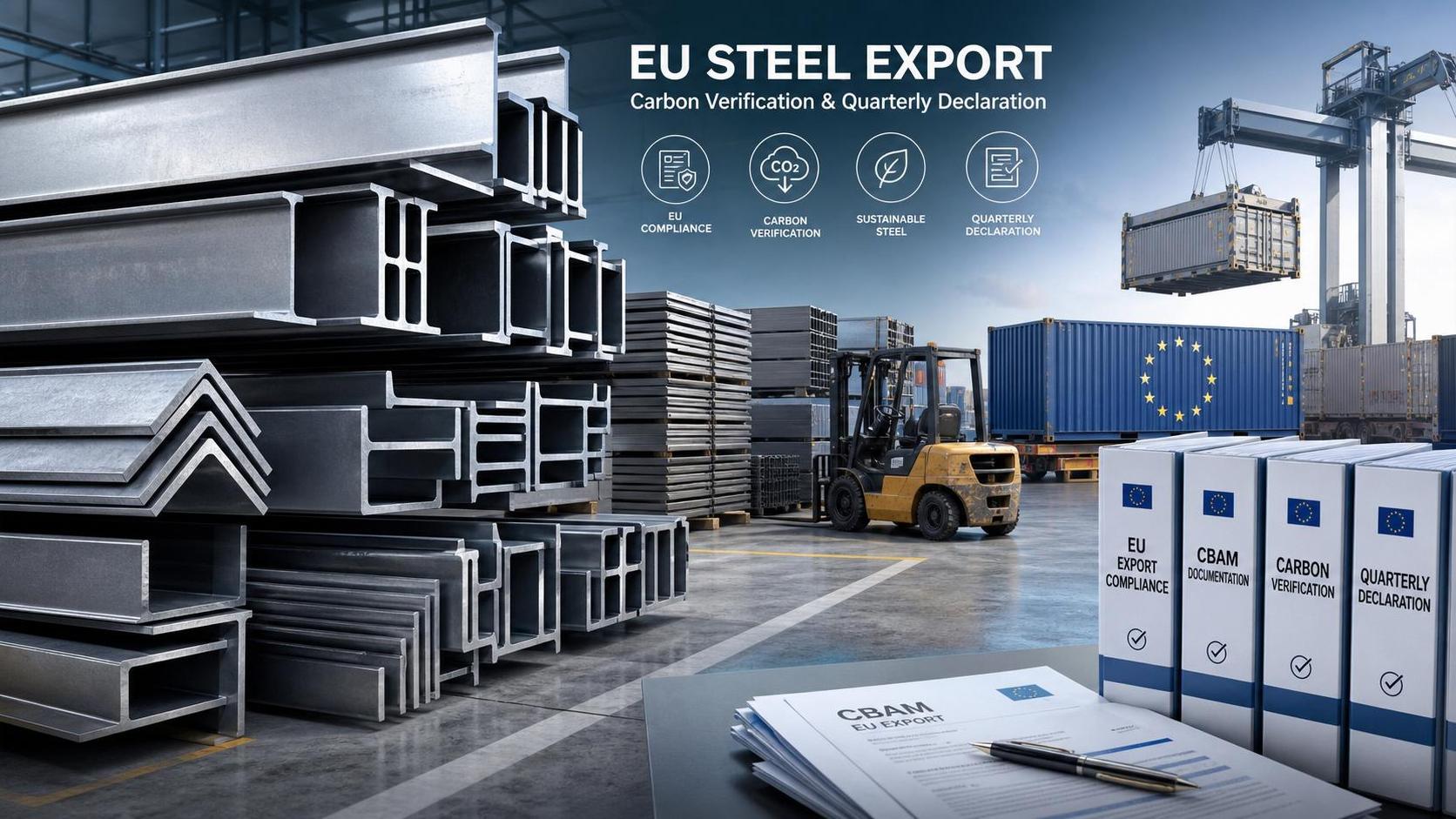
On October 1, 2026, a new compliance threshold takes effect for steel section exports to the EU under the latest CBAM transition guidance issued by the European Commission on June 26, 2026. The update brings structural steel products such as hot-rolled and cold-formed sections, H-beams, angles, and channels into a quarterly reporting scope that requires embedded carbon data verified by an accredited third party. For exporters, traders, and supply chain service providers handling shipments to Europe, the immediate concern is not only reporting itself, but also the shorter preparation window, added verification work, and possible effects on customs timing.
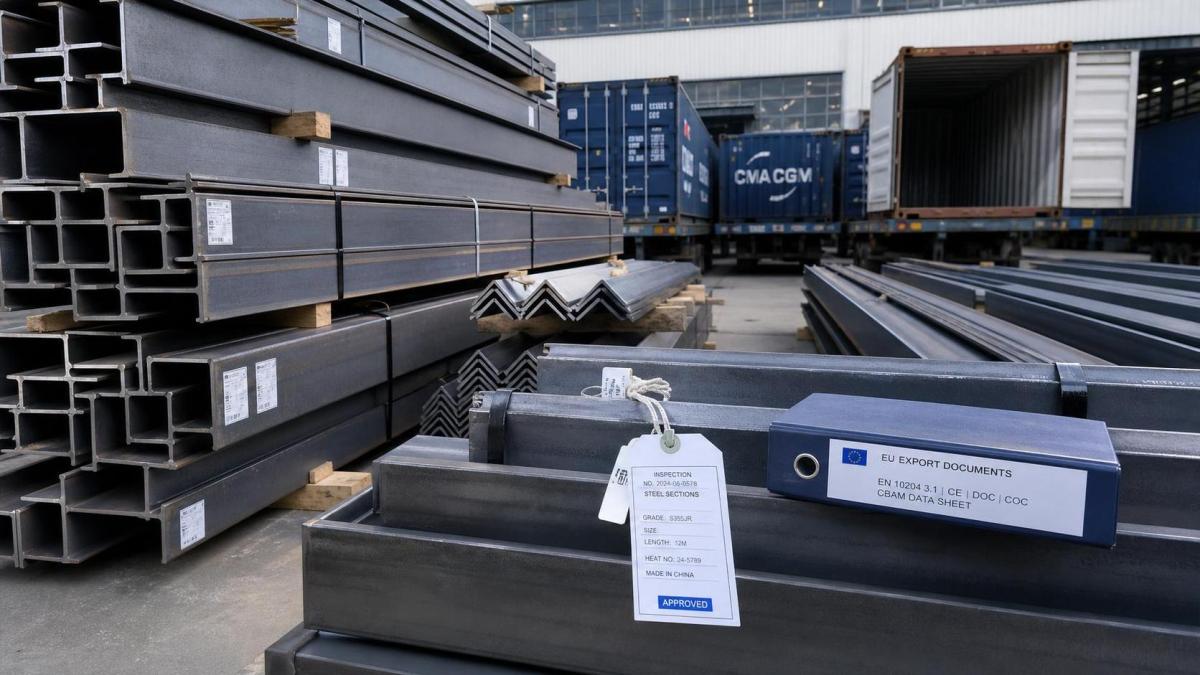
What the new guidance confirms
The confirmed fact is that the European Commission formally released the Carbon Border Adjustment Mechanism (CBAM) Steel Sector Implementation Guidance (Second Phase of the Transition Period) on June 26, 2026. According to the information provided, from October 1, 2026, all structural steel sections exported to the EU, including hot-rolled or cold-formed profiles, H-beams, angle steel, and channel steel, must submit embedded carbon emissions data that has been verified by an accredited third party.
The same guidance also places these products within the quarterly declaration framework. Based on the provided summary, this directly affects the compliance preparation cycle, certification cost burden, and customs clearance timing faced by Chinese steel section exporters.
Where the operational pressure is likely to appear
Export-facing steel suppliers will feel the compliance burden first
From an industry perspective, companies shipping covered steel sections to EU buyers are the most directly exposed. The reason is straightforward: the rule applies at the point where products enter the EU market. The main pressure points are likely to be product-level emissions data readiness, coordination with accredited third-party verification, and the ability to align reporting materials with shipment schedules.
What deserves closer attention is whether exporters can prepare compliant documentation early enough to avoid disruptions in delivery rhythm. Even where product demand remains unchanged, the administrative side of exporting becomes heavier once verification becomes a required part of quarterly reporting.
Processors and manufacturers may face tighter documentation demands
For processing and manufacturing businesses producing covered steel sections, the likely impact lies in upstream data organization. Analysis shows that once verified embedded carbon data becomes necessary for export, manufacturers may need to provide more complete production and emissions-related documentation to downstream exporters or trading partners. The commercial issue is not limited to production itself; it extends to whether internal records can support external verification in a usable format.
What deserves closer attention is the handoff between factory data and export compliance. If that handoff is weak, the bottleneck may appear before shipment rather than at the order stage.
Traders and supply chain service providers may see timing risk increase
Trading firms, logistics coordinators, customs-facing service providers, and other supply chain intermediaries may also be affected because quarterly declaration obligations and third-party verification can influence shipment documentation flow. Observably, the practical risk here is timing: when verification, declarations, and export documents are not aligned, customs-related processes may become less predictable.
For these participants, the issue is less about policy interpretation in the abstract and more about document completeness, handover timing, and communication with both suppliers and EU-side customers.
What companies should watch now
Track whether product scope and wording remain stable
Analysis shows that companies dealing in steel sections should pay close attention to how official wording is used in practice, especially around the covered product categories already identified in the guidance summary. The current signal is clear enough to require preparation, but businesses still need to monitor whether any later official clarification affects category interpretation or filing practice.
Separate policy language from day-to-day execution
What deserves closer attention is the gap between a published rule and operational readiness. A requirement for accredited third-party verification sounds clear at the policy level, but in practice companies need to know how documents will be assembled, checked, and submitted within quarterly cycles. That means internal teams should focus on process design as much as rule reading.
Review supplier documentation and delivery planning
For companies sourcing from multiple mills or processors, the immediate issue may be whether supplier-side records can support verified embedded carbon disclosures. Observably, this affects procurement coordination, shipment planning, and customer communication. Where delivery schedules are tight, firms may need to build more lead time into orders that are bound for the EU market.
Prepare customer communication around timing and cost impacts
Based on the provided facts, certification cost and customs timing are already identifiable pressure points. From an industry perspective, companies should be ready to communicate with EU customers about possible procedural changes, document lead times, and the operational implications of verified reporting requirements, especially for regular contract shipments.
Why this matters beyond a single reporting step
Analysis shows that this development is best understood as more than a narrow filing update for a few steel products. It signals that compliance for EU-bound steel trade is becoming more document-intensive at the product level, with embedded carbon data moving closer to a transactional requirement rather than a background disclosure issue.
At the same time, it would be premature to present this as a complete market outcome on its own. The confirmed facts establish a clear new requirement and a defined implementation date, but the full commercial effect will still depend on how exporters, manufacturers, verifiers, and logistics participants adapt in daily operations.
How to read the current signal
At this stage, it is more appropriate to understand the update as a concrete near-term compliance change with longer-term strategic implications. The near-term issue is practical readiness for verified embedded carbon reporting and quarterly declarations from October 1, 2026. The longer-term signal is that access to the EU market for covered steel sections is becoming more closely tied to traceable carbon documentation.
A neutral reading is that the rule does not by itself determine trade outcomes, but it does raise the operational threshold for EU-bound steel section exports. For market participants, the key task now is to treat compliance preparation, documentation quality, and timeline control as part of normal export execution.
Basis of this article and points for continued verification
This article is generated based on the user-provided news title, event date, and event summary. The factual basis used here is limited to the stated publication of the European Commission's CBAM steel sector transition guidance, the October 1, 2026 implementation timing, the covered steel section categories, the requirement for accredited third-party verification of embedded carbon emissions data, and the inclusion of these products in quarterly declarations.
For this type of industry update, source categories that are usually relevant include official announcements, company disclosures, industry association information, authoritative media coverage, and standards-related documents. No specific official source link was provided in the input, so the exact official link remains to be verified on an ongoing basis. Continued attention should focus on any further official wording, filing practice clarification, and implementation details affecting compliance timing and customs processing.
By clicking 'Allow All', you agree to the storage of cookies on your device to enhance site navigation, analyze site usage and assist with our marketing efforts.