


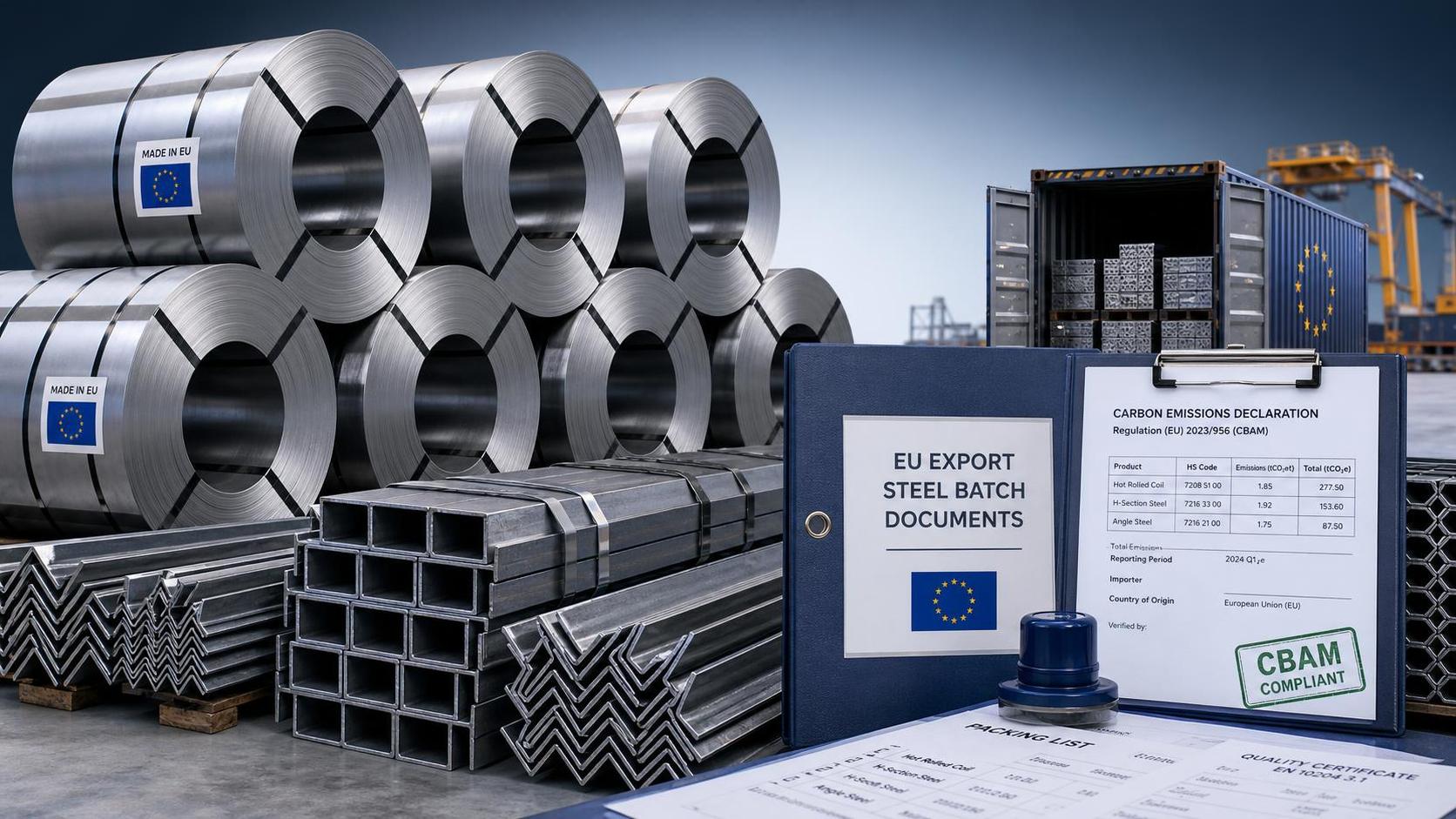
On July 26, 2026, the European Union moved the CBAM transition period for steel into a stricter reporting stage: exporters sending steel and section products to the EU must now complete mandatory batch-by-batch carbon emissions declarations through the EU-MRVS system. For Chinese steel exporters and related supply chain participants, this is not just a compliance update; it directly affects document readiness, coordination with third-party verification parties, and delivery scheduling tied to customs clearance.
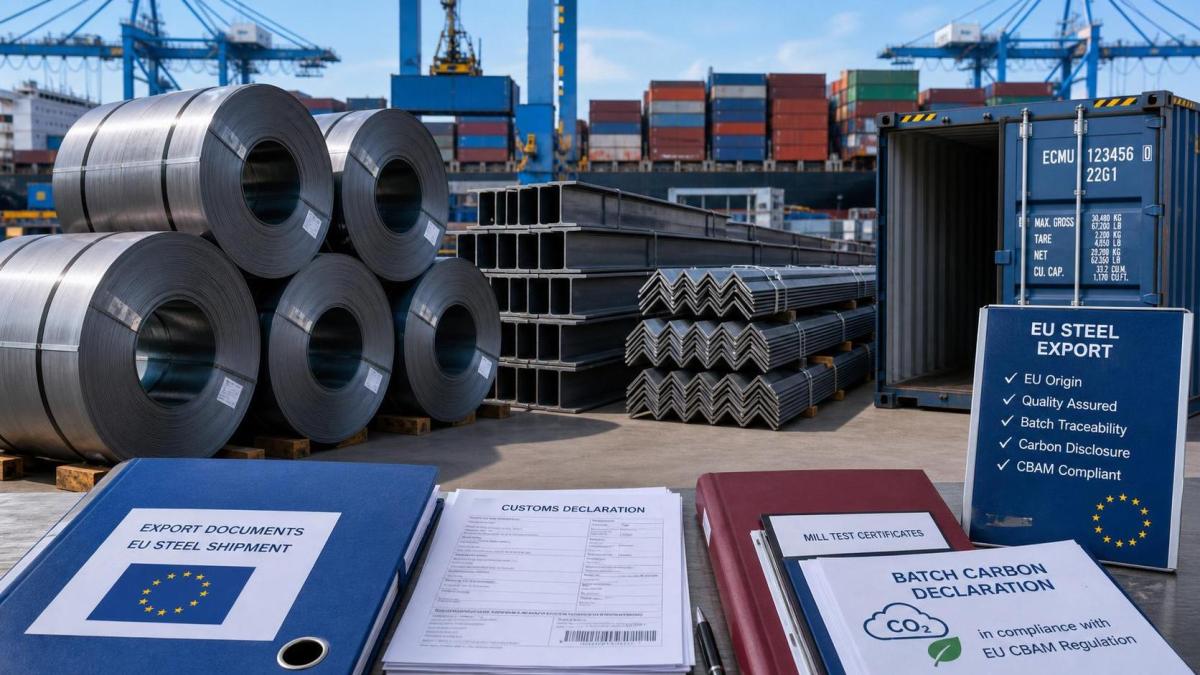
What Has Taken Effect From July 26
According to the information provided, the second stage of the EU CBAM transition period took effect on July 26, 2026. The requirement applies to steel and section products exported to the EU, including products such as hot-rolled coil, H-beams, and angle steel.
For these shipments, carbon emissions data must be declared for each batch through the EU-MRVS system. The same information indicates that non-compliant reporting may lead to customs clearance delays or refusal of receipt. The requirement is described as having a direct impact on documentation preparation, cooperation with third-party verification, and delivery cycle arrangements for Chinese steel exporters.
Where The Immediate Pressure Will Be Felt
Export transactions now depend more heavily on documentation timing
From an industry perspective, direct trading companies are likely to feel the first impact because the new requirement sits close to shipment execution. The main pressure point is the need to prepare emissions-related submission materials for each batch before goods can move through EU customs processes without disruption. What deserves closer attention is whether internal export documentation workflows are aligned with shipment timing.
Verification coordination becomes part of shipment preparation
For companies involved in processing and manufacturing, the issue is not limited to producing steel products themselves. Analysis shows that cooperation with third-party verification counterparts becomes more operationally important because the reporting obligation is tied to batch-level emissions declarations. This can affect how supporting materials are assembled and how quickly a shipment can be cleared for dispatch.
Logistics and delivery planning face a tighter compliance link
Supply chain service providers and delivery planners may also be affected because non-compliant declarations can lead to customs delays or rejection. Observably, this makes carbon reporting a practical delivery-risk factor rather than a separate policy issue. The business link to watch is the handoff between exporter paperwork, verification coordination, and the shipment schedule promised to EU customers.
What Companies Should Watch In Daily Operations
Batch-level reporting readiness
Companies exporting covered steel products should pay close attention to whether their reporting preparation is organized at the batch level, since the requirement is described as mandatory for each shipment batch rather than as a broad periodic filing issue.
Consistency between shipment documents and emissions submissions
What deserves closer attention is the practical match between trade documents and the emissions information submitted through EU-MRVS. In operational terms, any mismatch or missing step could become a clearance problem rather than a back-office issue.
Third-party coordination lead time
Because the provided information specifically highlights cooperation with third-party verification, companies should watch whether verification arrangements fit actual shipping lead times. This is especially relevant for exporters handling multiple product categories such as hot-rolled coil, H-beams, and angle steel for EU delivery.
Customer communication and delivery buffers
Analysis shows that exporters may need to pay closer attention to delivery commitments and communication with buyers when shipments are exposed to compliance-related clearance risk. The practical focus is not abstract policy interpretation, but whether promised handover dates remain realistic under the new reporting condition.
Why This Looks More Than A Routine Filing Change
Observably, this update is more significant than a minor administrative adjustment because the reporting requirement is tied directly to customs outcomes. Based on the provided facts, the immediate meaning lies in execution: carbon reporting for steel exports to the EU is now embedded in shipment-by-shipment trade operations.
It is more appropriate to understand this as a short-term operational change with longer-term signaling value. The confirmed facts do not, by themselves, establish broader market results or long-range trade shifts. However, they do indicate that compliance handling, verification support, and delivery planning now need closer attention at the transaction level.
How This Update Is Best Understood Right Now
At this stage, the clearest industry takeaway is that the EU's CBAM transition requirements for steel exports have become more execution-focused from July 26, 2026 onward. For market participants connected to EU-bound steel shipments, the issue is no longer only whether the rule exists, but whether each batch can be documented and declared in time.
A neutral reading is that this development should be treated as an immediate compliance and operations matter, while its wider commercial effects still require continued observation. The most relevant near-term focus remains documentation quality, verification coordination, and delivery scheduling discipline.
Basis Of This Article
This article is based on the user-provided news title, event date, and event summary concerning the EU's full reporting requirement during the CBAM transition period for steel products. In coverage of this type, commonly relevant source categories may include official announcements, company statements, industry association updates, authoritative media reporting, and standard-setting or compliance-related documents.
No specific official source link was provided in the input, so the exact official reference still requires ongoing verification. Areas that merit further monitoring include any follow-up clarification in official wording, implementation details in actual customs practice, and whether operational requirements around reporting and verification are further refined.
By clicking 'Allow All', you agree to the storage of cookies on your device to enhance site navigation, analyze site usage and assist with our marketing efforts.