


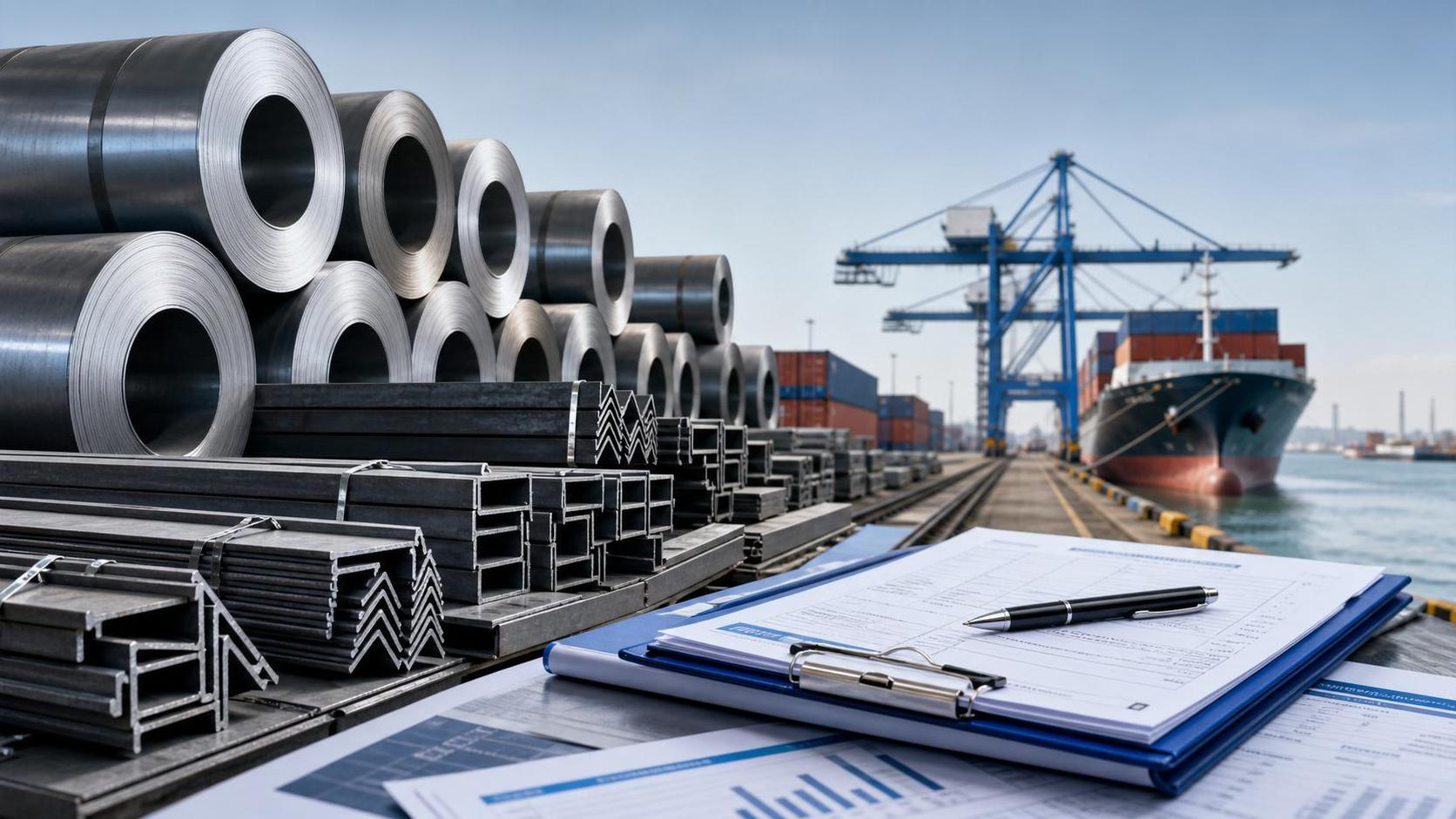
On July 15, 2026, the EU began applying a new quota management mechanism to key steel categories including hot-rolled coil under HS 7208/7211, following a European Commission notice published on July 14. For Chinese suppliers and other third-country exporters, the change matters because exports now require advance registration through an EU-authorized representative in the EUDR Portal and submission of quarterly export plans, with customs clearance at risk if those steps are missed. The development is especially relevant for steel exporters, overseas distributors, procurement teams, and supply chain operators managing delivery timing and compliance documents.
What the New EU Mechanism Confirms
The confirmed information is limited but commercially important. According to the provided event summary, the European Commission announced on July 14, 2026 that, from July 15, 2026, a Dynamic Quota Management System (DQMS) would apply to key steel products including hot-rolled steel coil under HS 7208/7211.
The new system replaces the previous safeguard quota arrangement for the covered products. Under the mechanism described in the summary, all third-country exporters, including Chinese suppliers, must complete pre-registration through an EU-authorized representative in the EUDR Portal and submit quarterly export plans.
The same summary also states that customs clearance will be refused if these requirements are not completed. It further indicates that the mechanism directly affects overseas distributors' ordering rhythm, delivery schedules, and compliance document preparation.
Where the Immediate Pressure Is Likely to Appear
Export transactions may face a tighter pre-shipment sequence
From an industry perspective, direct trading companies are likely to feel the impact first because the new requirement sits before customs clearance rather than after shipment. The practical pressure point is whether export planning, registration, and documentation can be aligned in time with the intended shipment window.
Distributors may need to adjust ordering cadence
Overseas distributors are specifically referenced in the event summary as being affected. Analysis shows that their exposure is tied to order timing: if quarterly export plans become part of the shipment path, distributors may need to place orders earlier or coordinate more closely with suppliers and EU-side representatives to avoid clearance disruption.
Logistics and compliance service teams will carry more coordination work
For supply chain service providers, the issue is less about steel pricing and more about process control. What deserves closer attention is the connection between booking schedules, document readiness, portal registration status, and customs timing. Any mismatch across those steps could create delivery uncertainty even when product demand remains unchanged.
Procurement and downstream users may need clearer delivery visibility
For buyers and downstream manufacturing users, the main concern is continuity of supply. Observably, the immediate business effect may appear in lead-time visibility and shipment reliability rather than in end-use demand itself. That makes communication with suppliers on quota planning and document readiness more important in ongoing orders.
Operational Issues Companies Should Watch Closely
Whether the EU-side registration path is fully in place
Companies involved in exports to the EU should closely track whether their EU-authorized representative is prepared to complete pre-registration in the EUDR Portal. The rule, as provided, makes that step a condition tied to customs clearance, so it is not a secondary administrative item.
How quarterly export planning affects contract timing
The requirement to submit quarterly export plans deserves close operational review. Businesses should distinguish between a commercial shipment schedule and a compliance filing schedule, because the event summary indicates that the new mechanism links export planning directly to clearance eligibility.
Which documents must be ready before shipment moves
Analysis shows that document preparation becomes a frontline issue under this change. Exporters, distributors, and service providers should focus on whether internal document handoffs are early enough to match registration and quarterly planning requirements, especially for hot-rolled coil shipments covered by HS 7208/7211.
How customer communication should change
For customer-facing teams, this is also a communication issue. Delivery promises, shipping windows, and order confirmation practices may need to reflect the added compliance step. What deserves closer attention is not only whether goods can be shipped, but whether shipment dates can still be committed with the same confidence as before.
Why This Looks More Like a Process Shift Than a One-Day Event
Observation suggests that this development should not be read only as a date-specific policy update. It is more appropriate to understand this as a process change with immediate execution consequences, because the summary points to a new registration and planning workflow that directly affects customs clearance.
At the same time, the current information does not by itself confirm the full commercial outcome across volumes, pricing, or long-term trade flows. Analysis shows that the clearer near-term signal is operational: compliance sequencing, order timing, and delivery coordination are now more exposed to procedural risk.
That is why the industry still needs continued observation. The key question is not only that a new mechanism has started, but how consistently it will be implemented in day-to-day export operations for covered steel products.
How the Market May Best Read This Development Now
At this stage, the most reasonable reading is that the EU's new steel quota mechanism creates an immediate compliance threshold for hot-rolled coil and other covered products, with direct consequences for exporters, distributors, and logistics coordination. The confirmed change is procedural, but its business relevance is practical and near term.
It is more appropriate to understand this as an operational and regulatory signal that requires close follow-up, rather than as a basis for broad conclusions about the full market impact. For now, companies are likely to benefit most from watching execution details, documentation readiness, and shipment planning discipline.
Basis of This Article and What Still Needs Verification
This article is based on the user-provided news title, event date, and event summary. The confirmed facts used here come from the provided description of a European Commission notice dated July 14, 2026 and its stated implementation from July 15, 2026.
For this type of industry update, relevant source categories typically include official notices, company statements, industry association releases, authoritative media reporting, and standards or regulatory documents. A specific official source link was not provided in the input, so the exact official link still requires follow-up verification.
Further observation should focus on whether additional official explanations, implementation details, or procedural clarifications emerge around DQMS operation, EUDR Portal registration practice, and quarterly export plan handling for affected steel products.
By clicking 'Allow All', you agree to the storage of cookies on your device to enhance site navigation, analyze site usage and assist with our marketing efforts.