



Effective June 8, 2026, the United States is implementing a temporary tariff adjustment on certain industrial equipment made from steel, aluminum, and copper under Section 232 of the Trade Expansion Act of 1962. The change lowers the local-content threshold for some derivative products to qualify for a 10% ad valorem tariff, reduces tariff rates for agricultural and mobile industrial equipment, and adds new taxable categories such as aluminum plates and steel racks. For exporters, manufacturers, sourcing teams, and trade compliance functions, the development is worth close attention because it directly affects tariff classification, origin declarations, and pricing decisions in the target market.
What the June 8 adjustment changes
The White House announced on June 1 that, starting June 8, a temporary tariff adjustment will apply to certain steel-, aluminum-, and copper-based industrial equipment under Section 232 of the Trade Expansion Act of 1962.
According to the announced terms, derivative products with 85% local content, down from the previous 95% threshold, may qualify for a 10% ad valorem tariff. In parallel, tariff rates for agricultural equipment and mobile industrial equipment are reduced from 25% to 15%.
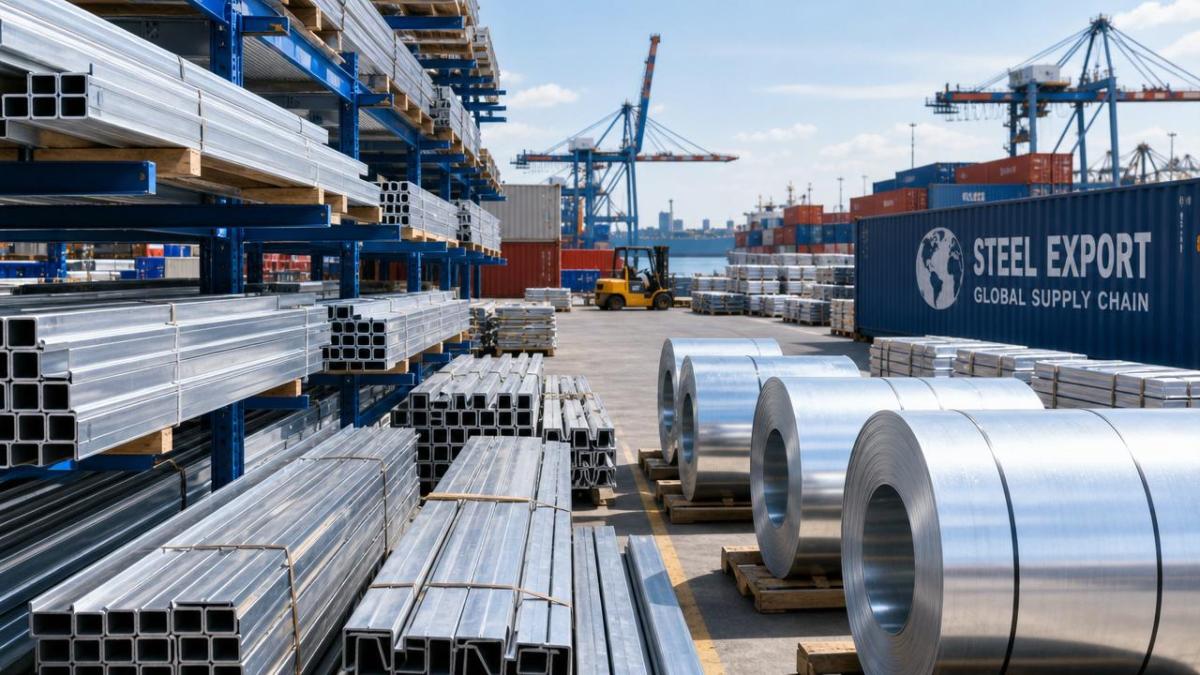
The same adjustment also adds new taxable categories, including aluminum flat plates and steel racks. The policy directly affects tariff classification, origin-compliance declarations, and target-market pricing strategies for Chinese exporters of steel products and structural sections.
Where the practical impact is likely to appear first
Export transactions may face a narrower margin for classification errors
From an industry perspective, exporters shipping steel products, profiles, or related industrial equipment to the US market may feel the effect first in customs classification and origin filing. The adjustment does not simply change tariff levels; it also changes the practical threshold that may determine whether a product falls into a more favorable treatment path or into a newly taxed category. What deserves closer attention is whether product descriptions, bills of materials, and commercial documents are aligned closely enough with the applicable tariff treatment.
Manufacturing and sourcing teams may need to revisit content calculations
For processing manufacturers and procurement teams, the reduction of the local-content threshold from 95% to 85% creates a compliance issue rather than a simple pricing issue. Analysis shows that companies involved in multi-source production or component integration may need to review how local content is calculated, documented, and presented in supporting materials. The key concern is not only whether a product may obtain a lower tariff rate, but also whether the underlying records are sufficient to support the declaration if questioned during execution.
Distributors and supply-chain service providers may need to reset quoting logic
Channel operators, trading intermediaries, and supply-chain service providers are likely to see the impact in quotation models, delivery commitments, and product-scope screening. The addition of aluminum flat plates and steel racks to taxable categories means that some goods previously handled under one commercial assumption may now require a different landed-cost review. Observably, this may affect contract pricing, shipment batching, and category checks before customs clearance.
What companies should examine now
Check whether product mapping still matches the updated tariff scope
Analysis shows that companies should first review whether their current product mapping still fits the adjusted tariff structure, especially where industrial equipment, derivative products, aluminum flat plates, or steel racks are involved. If internal product descriptions are too broad or inconsistent across sales, customs, and logistics documents, the risk of misalignment may increase.
Strengthen origin and content-supporting documentation
What deserves closer attention is the documentation behind local-content claims. Where a business expects to rely on the 85% local-content threshold for a 10% tariff treatment, supporting records for origin declarations, component sourcing, and technical documentation should be reviewed carefully. The input does not provide detailed execution criteria, so this should be understood as a compliance watchpoint rather than a confirmed filing standard.
Recalculate target-market pricing and bid assumptions
For companies quoting into the US market, the tariff reduction for agricultural and mobile industrial equipment from 25% to 15% may affect offer structures, margin assumptions, and bid positioning. At the same time, the addition of new taxable categories means some quotations may need to be recalculated rather than simply lowered. This is particularly relevant where final pricing depends on product classification and origin treatment.
Monitor follow-up wording and execution practice
Because the input provides the announced adjustment but not the full execution detail, companies should continue watching for official wording, implementation interpretation, and any downstream changes in tender documents, customer compliance requests, or transaction review practices. It is more appropriate to understand this as an operational compliance issue that requires ongoing monitoring, not as a fully settled execution outcome.
Why this reads as an execution signal, not a complete endpoint
Observably, this development matters less as a broad trade headline and more as a signal that tariff treatment is being adjusted at the level of category scope, rate design, and local-content conditions. From an industry perspective, the most important point is that lower rates in some segments do not reduce compliance sensitivity overall. The simultaneous addition of new taxable categories means the rule change combines relief in some areas with tighter exposure in others.
Analysis shows that the market should not read the announcement as a universal easing of import conditions for metal-based industrial goods. It is more appropriate to understand it as a targeted rule adjustment with immediate implications for filing accuracy, documentary readiness, and pricing discipline. Further market feedback and execution practice still need to be observed.
How this update is best understood at this stage
At this stage, the June 8 tariff adjustment is best read as a rule change that has already entered the execution window, while its detailed practical effects still require close observation. For affected exporters, manufacturers, procurement teams, and trade service providers, the immediate issue is not only whether tariffs are lower in specific cases, but whether product scope, origin claims, and pricing logic remain consistent with the revised framework.
A neutral reading is that this is both a landed change and a continuing compliance development. The tariff reductions create room for recalculation in some product lines, but the expanded taxable scope and the importance of origin declarations mean the operational burden may become more concentrated rather than lighter.
Basis of this article and what still needs verification
This article is generated based on the user-provided news title, event date, and event summary. For developments of this type, relevant source categories typically include official announcements, releases from regulatory or trade authorities, customs-related information, industry association notices, standards documentation, and reporting by authoritative media.
No specific official source link was provided in the input, so the exact official text and any later implementation materials still require continued verification. What should continue to be monitored includes detailed policy wording, execution interpretations, compliance documentation expectations, tender-document changes, market feedback, and how affected companies apply the rule in practice.
By clicking 'Allow All', you agree to the storage of cookies on your device to enhance site navigation, analyze site usage and assist with our marketing efforts.